
Hydration Myth Busted: Can Beer Replace Your Sports Drink?
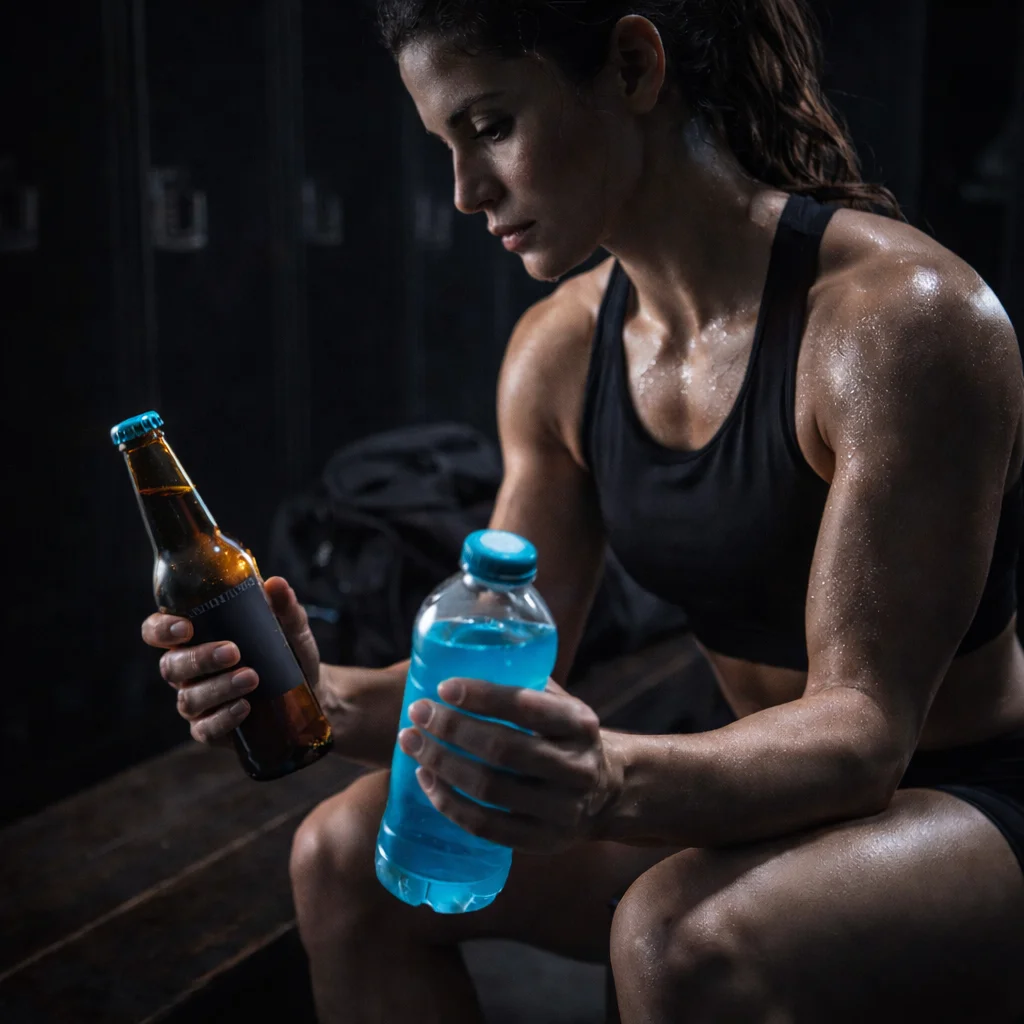
Picture this: you finish a hard run on a hot day, drenched in sweat, and your friends invite you for a beer. Your first thought? "I should probably just drink water. Beer will dehydrate me even more." This reflexive caution is so ingrained in fitness culture that it feels like common sense. Alcohol is a diuretic. Exercise causes fluid loss. Therefore, beer after training must worsen dehydration.
This logic gets repeated everywhere: in gym conversations, sports nutrition blogs, and social media fitness advice. It's treated as an obvious truth that requires no examination. Yet despite how confidently this claim is made, it's rarely tested under conditions that actually reflect how people consume beer after exercise.
Here's what makes the conventional wisdom incomplete: most people who drink beer after training don't replace all their fluids with alcohol. They have a beer or two, then continue drinking water. They eat food. They rehydrate over several hours. The question isn't whether pure alcohol dehydrates you in a lab setting. It's whether moderate beer consumption in a realistic context actually impairs recovery hydration.
A crossover study examined this exact scenario using objective hydration markers rather than assumptions. The researchers asked a simple but important question: does consuming a moderate amount of regular beer after exercise negatively affect hydration compared with drinking water? The answer challenges decades of oversimplified advice.
The Research Question: Theory vs. Reality
The study's objective was refreshingly practical. Rather than testing extreme scenarios or theoretical mechanisms, the investigators focused on a real-world question that actually matters to recreationally active people.
They designed the study to determine whether moderate consumption of regular beer after exercise negatively affects hydration markers compared with water in physically active men. Not whether alcohol can be dehydrating in theory. Not whether heavy drinking impairs rehydration. But whether a realistic amount of beer, consumed the way people actually drink it, creates measurable hydration problems.
Why This Matters: Most hydration research tests extreme conditions or isolated variables. This study tested a scenario that happens thousands of times daily in gyms, running clubs, and recreational sports leagues around the world.
Study Design: Testing Real Behavior
Crossover Design for Strong Comparisons
The researchers employed a crossover design, meaning each participant completed both rehydration conditions on separate occasions. This approach is scientifically stronger than comparing different groups because each person serves as their own control, eliminating individual variability in metabolism, sweat rate, and hydration status.
The participants were physically active males, representative of recreationally trained individuals rather than elite athletes or sedentary populations. This population choice reflects the people most likely to face this exact scenario in real life.
Creating Meaningful Dehydration
To test rehydration strategies, you first need dehydration. The researchers had participants complete an exercise protocol designed to induce fluid loss:
- Exercise resulted in approximately 2 to 2.4 percent loss of body mass
- This level represents moderate dehydration typical of training sessions
- Sufficient to impair performance and create rehydration demand
- Not so extreme as to be unrealistic for everyday training
Measurements were taken before exercise, immediately after exercise when dehydration peaked, and after the rehydration period to assess recovery.
The Two Rehydration Strategies
Here's where the study design reflects reality rather than laboratory theory. Participants completed two distinct recovery conditions:
| Condition | What They Drank | Key Detail |
|---|---|---|
| Water Control | Mineral water ad libitum (drink freely) | Standard rehydration approach |
| Beer + Water | Up to ~660 mL regular beer, then water ad libitum | Realistic social scenario |
The critical design element: beer wasn't consumed instead of water. It was consumed first, followed by unrestricted water access. This mirrors how people actually behave. You have a beer or two after training, then continue hydrating with water throughout the evening.
Objective Hydration Markers
Rather than relying on subjective reports of thirst or how people felt, the researchers measured concrete physiological indicators:
- Body mass changes - the most direct measure of fluid balance
- Fat-free mass - distinguishes actual tissue hydration from total weight
- Fluid balance calculations - intake minus output over the recovery period
- Urine excretion - direct measure of fluid loss, the main concern with alcohol's diuretic effect
This comprehensive approach provides a clear picture of hydration status rather than depending on a single imperfect metric.
Results: When Conventional Wisdom Meets Data
Body Mass Recovery: No Difference
Body mass is the gold standard for tracking hydration status in exercise science. Lose weight during exercise? That's almost entirely water. Regain that weight during recovery? You're rehydrating.
The results were unambiguous:
- Both conditions started with approximately 2.4 percent body mass loss from exercise
- Body mass increased similarly in both water-only and beer-plus-water trials during recovery
- Fat-free mass also increased comparably in both conditions
- Neither condition achieved complete rehydration within the measured recovery window
Critically, the presence of moderate beer consumption did not result in poorer body mass recovery compared with water alone. If beer were significantly dehydrating in this context, we'd expect to see less weight regained in the beer condition. That didn't happen.
Fluid Balance: The Numbers Tell the Story
Fluid balance calculations track total fluid intake minus total fluid output (primarily urine). This provides a comprehensive view of net hydration across the recovery period.
The key findings:
- Fluid balance did not differ between the beer and water rehydration strategies
- Both conditions showed similar patterns of fluid retention and loss
- The beer group wasn't playing catch-up or falling behind in net hydration
Urine Output: The Diuretic Effect That Wasn't
This is the measure everyone expects to show a difference. Alcohol increases urine production, right? Therefore, beer should cause more fluid loss through increased urination.
What actually happened:
- Urine excretion values were similar between conditions
- No evidence that moderate beer consumption led to greater urinary fluid losses
- The diuretic effect, if present, didn't translate to measurably worse fluid balance
The Bottom Line: Across all measured hydration markers, no deleterious effects were observed when moderate beer intake was included in post-exercise rehydration alongside water.
What This Study Actually Proves
Within the carefully defined scope of this crossover trial, the evidence supports a clear and specific conclusion:
In young, physically active men, consuming a moderate amount of regular beer (approximately 660 mL) after exercise, followed by water ad libitum, did not negatively affect hydration markers compared with water alone. Body mass recovery, fat-free mass, fluid balance, and urine output were comparable between conditions.
This directly contradicts the blanket assertion that beer after exercise is dehydrating or impairs hydration recovery.
Why Beer Isn't as Dehydrating as Expected
Beer Is Mostly Water
This point seems obvious but gets overlooked in discussions that treat beer purely as "alcohol." Regular beer is approximately 90 to 95 percent water. When you drink 660 mL of beer, you're consuming roughly 600 mL of water along with about 25-30 grams of alcohol (depending on alcohol content).
That substantial fluid volume still contributes to rehydration, even if it comes packaged with alcohol. The net effect on hydration depends on whether the water content outweighs the diuretic effect of the alcohol. In moderate amounts, it appears to.
Dose-Dependent Diuretic Effects
Alcohol's diuretic properties are real and well-documented, but they're dose-dependent. Small amounts of alcohol may produce minimal diuretic effects that are easily offset by the fluid volume in which they're dissolved. Larger amounts produce more pronounced effects.
The study suggests that at the tested volume (about two standard beers), and when followed by water consumption, the net effect on measurable hydration markers is minimal. This doesn't mean alcohol has no diuretic effect. It means the effect at this dose, in this context, doesn't translate to clinically meaningful hydration impairment.
Context and Compensation Matter
Perhaps the most important lesson: beer wasn't consumed in isolation. Participants had unrestricted access to water after beer consumption, and presumably continued drinking throughout recovery. This reflects common behavior and highlights that hydration outcomes depend on the overall fluid intake pattern, not just whether alcohol is present.
If you drink two beers and then stop all fluid intake, outcomes might differ. If you drink two beers and continue hydrating with water over the next few hours, the data suggest hydration status remains comparable to water-only rehydration.
What This Study Does NOT Claim
The findings are often misunderstood or overstated. Let's be precise about what the study does not show:
Beer Is NOT a Superior Hydration Beverage
The study does not claim that beer is better than water or sports drinks for rehydration. It shows that moderate beer consumption doesn't impair hydration markers compared with water. That's not the same as claiming beer is optimal.
Sports drinks containing sodium, potassium, and carbohydrates are still the evidence-based gold standard for rapid rehydration after heavy sweat losses, especially when quick recovery is needed for subsequent training or competition.
Beer Alone Is NOT Sufficient
The study tested beer followed by water, not beer as the sole rehydration strategy. The results don't suggest that drinking only beer adequately rehydrates you. Continued water consumption was part of the intervention.
No Long-Term or Performance Data
The study measured acute hydration markers over a recovery period, not long-term effects of repeated post-exercise beer consumption on training adaptations, performance, or health. It also didn't test whether beer affects other aspects of recovery beyond hydration.
Limited to Specific Population
Results apply to young, physically active men. They may not generalize to women (who typically have different alcohol metabolism and body water distribution), older adults, elite athletes, or individuals with medical conditions.
Practical Applications: What This Means for Active People
Recreational Training: Relax About Moderate Beer
For people training recreationally without immediate performance demands, this study provides reassurance. Having a beer or two after training isn't going to derail your hydration status, provided you also drink water and aren't training again within hours.
This matters for social contexts where training and socializing overlap: after recreational sports leagues, group runs, cycling clubs, or gym sessions with friends. The rigid avoidance of any alcohol isn't supported by hydration data in these scenarios.
Performance Context: Stick With Evidence-Based Strategies
The study did not test scenarios requiring rapid, complete rehydration for performance:
- Multiple training sessions in one day
- Competition the next morning
- Extreme heat or prolonged endurance events
- Situations with significant electrolyte losses
In these contexts, fluids containing sodium and carbohydrates remain the standard recommendation. Beer lacks sufficient electrolytes and offers no performance advantage over purpose-designed sports drinks.
Moderation Remains Key
The tested volume was approximately 660 mL of regular beer, roughly equivalent to two standard drinks. This is moderate consumption by most definitions. The findings should not be extrapolated to larger volumes, higher alcohol concentrations, or heavy drinking.
At higher doses, alcohol's diuretic and metabolic effects likely do impair rehydration and recovery. The dose matters enormously.
Water Consumption Is Non-Negotiable
The study design included ad libitum water consumption after beer. This isn't an optional detail. Continued water intake was part of the intervention that showed no hydration impairment. If you drink beer and then stop hydrating, you're no longer following the protocol that produced these results.
Study Limitations Worth Noting
Specific Beer Volume and Type
Results apply specifically to approximately 660 mL of regular beer (typical alcohol content 4-5 percent). Larger volumes, stronger beers, or different alcoholic beverages weren't examined. Generalizing beyond this is speculative.
Water Always Available
Beer was consumed alongside, not instead of, water. The study doesn't evaluate beer as a standalone rehydration strategy, which would likely produce different outcomes.
Limited Hydration Markers
While the study measured several objective markers, it didn't assess all aspects of hydration physiology. Detailed electrolyte panels, plasma osmolality, or cellular hydration markers weren't reported. The picture is comprehensive but not exhaustive.
Acute Measurement Window
The study tracked hydration over a recovery period of several hours. It doesn't address overnight rehydration, next-day performance, or cumulative effects of repeated post-exercise drinking patterns.
The Bigger Picture: Nuance Over Dogma
This study exemplifies why blanket nutritional rules often fail under scrutiny. "Alcohol is dehydrating" isn't wrong, but it's incomplete. The full picture requires context: how much alcohol, in what form, consumed alongside what else, in what population, and measured how?
The fitness industry tends toward absolutism: avoid this, always do that, never combine these. Real physiology is more flexible. Moderate beer consumption after exercise, when accompanied by adequate water intake, doesn't create the hydration crisis that conventional wisdom predicts.
That doesn't make beer a health food or optimal recovery beverage. It just means that in realistic, moderate scenarios, the hydration consequences are less severe than commonly assumed. For many people balancing training with social life, that's useful information.
Summary: Rethinking Post-Exercise Hydration Myths
This crossover study provides data-driven clarity on a question that's generated more assumptions than evidence.
Primary finding: In physically active men, moderate beer intake (approximately 660 mL) after exercise did not negatively affect hydration markers compared with water, when water was also consumed. Body mass recovery, fluid balance, and urine output were equivalent between conditions.
What it means: Beer isn't automatically dehydrating in a post-exercise context when consumed in moderation alongside continued water intake. The dire warnings about any alcohol after training aren't supported by objective hydration measurements in this scenario.
What it doesn't mean: Beer is not optimal for performance rehydration, doesn't replace sports drinks in demanding contexts, and shouldn't be the sole rehydration strategy. The findings apply to moderate amounts in recreational settings, not heavy drinking or high-performance scenarios.
Practical takeaway: For recreational training without immediate performance demands, having a beer or two after exercise won't sabotage your hydration if you also drink water. Moderation and continued fluid intake are the key variables, not the presence of beer itself.
Hydration is important. Evidence is important. Nuance is important. Sometimes the science says the conventional wisdom oversimplifies, and this is one of those cases. Your post-workout beer, consumed responsibly alongside water, isn't the hydration disaster it's made out to be.
References and Further Reading
- Jiménez-Pavón D, Cervantes-Borunda MS, Díaz LE, et al. Effects of a moderate intake of beer on markers of hydration after exercise in the heat: a crossover study. Journal of the International Society of Sports Nutrition. 2015;12:26. PMID: 26097440
- Shirreffs SM, Maughan RJ. Restoration of fluid balance after exercise-induced dehydration: effects of alcohol consumption. Journal of Applied Physiology. 1997;83(4):1152-1158. PMID: 9338423
- Desbrow B, Murray D, Leveritt M. Beer as a sports drink? Manipulating beer's ingredients to replace lost fluid. International Journal of Sport Nutrition and Exercise Metabolism. 2013;23(6):593-600. PMID: 23645235