
Swish, Don't Swallow: Mouth Rinsing Carbs Boosts Lift Power
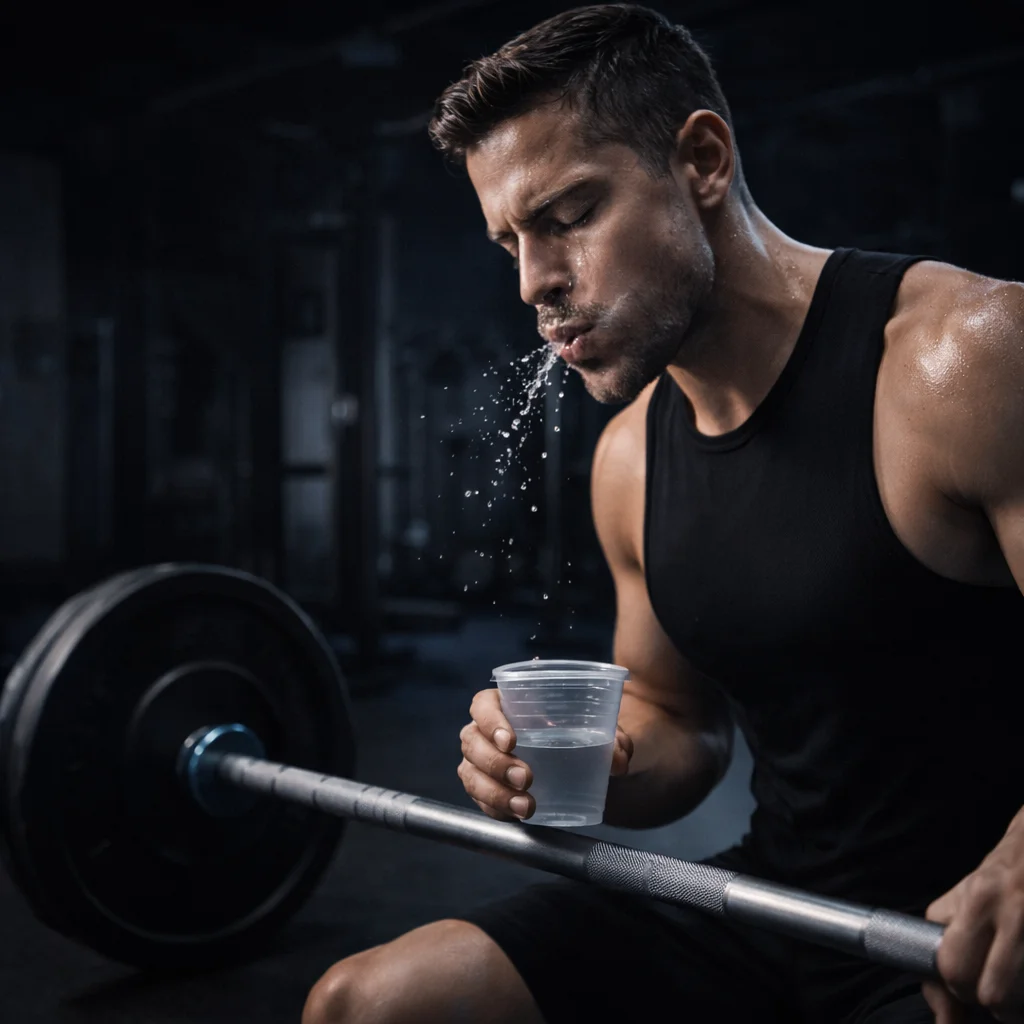
Imagine boosting your lifting performance without consuming a single calorie. No pre-workout meal timing to worry about. No digestion required. Just swish, spit, and lift stronger. It sounds too simple to work, the kind of hack that fitness influencers might promote based on wishful thinking rather than physiology.
But here's what makes this different: it's not about what you swallow. It's about what your mouth detects. Your oral cavity contains carbohydrate receptors that communicate directly with brain regions controlling motor output, motivation, and perceived effort. When these receptors sense carbohydrates, something changes in how your nervous system drives muscle contraction, even if no fuel enters your bloodstream.
A controlled study tested this mechanism in the simplest way possible. Participants rinsed their mouths with a carbohydrate solution for 20 seconds, spit it out, then performed explosive resistance exercises. No calories. No energy substrate. Just oral detection. The researchers measured power output, force production, and total mechanical work across multiple sets to determine whether the rinse made any measurable difference.
The results were unambiguous. Across multiple performance metrics, the carbohydrate mouth rinse produced significant improvements compared with a placebo rinse. This wasn't placebo effect or wishful measurement. It was real, quantifiable enhancement of neuromuscular output triggered by carbohydrate sensing in the mouth.
The Research Question: Can Taste Alone Improve Performance?
The study's objective was refreshingly direct. The researchers wanted to determine whether pre-exercise carbohydrate mouth rinsing increases resistance training performance compared with a placebo rinse.
They specifically examined whether a carbohydrate mouth rinse could improve:
- Concentric peak power (maximum power during lifting phase)
- Eccentric peak power (maximum power during lowering phase)
- Average power across repetitions
- Total work performed during the session
Critical Design Choice: This study focused on acute performance during a single session, not long-term adaptations. The goal was to isolate whether oral carbohydrate exposure alone can alter neuromuscular output without any metabolic contribution.
This design is important because it separates the neural effects of carbohydrate sensing from the metabolic effects of carbohydrate consumption. If performance improves despite no ingestion, the mechanism must be centrally mediated through the nervous system rather than through energy delivery to muscles.
Study Design: Controlling for Everything But the Rinse
Crossover Design for Precision
The researchers employed a randomized crossover design where each participant completed both conditions on separate testing days. This approach eliminates between-subject variability in strength, technique, motivation, and training status. Each person serves as their own control, strengthening the ability to detect real effects.
Participants
The study included 20 healthy adult men with the following characteristics:
- Mean age: approximately 22.4 ± 3.7 years
- Mean BMI: approximately 26 ± 3.8
- All physically active and familiar with resistance training
This population represents typical gym-goers and recreational lifters rather than elite athletes or untrained individuals.
The Two Mouth Rinse Conditions
Participants completed two experimental conditions on separate testing days:
| Condition | Solution | Protocol |
|---|---|---|
| Carbohydrate Rinse (CMR) | 6.6% maltodextrin solution | Rinse for 20 seconds, then spit out completely |
| Placebo Rinse (PL) | Mineral water | Rinse for 20 seconds, then spit out completely |
The carbohydrate concentration (6.6 percent) was deliberately chosen to activate oral carbohydrate receptors without providing sweetness levels that might compromise blinding. Crucially, participants expel the solution completely. Zero calories are consumed. The only difference between conditions is what the mouth detects during those 20 seconds.
Exercise Protocol: Testing Power and Work
Immediately after the mouth rinse, participants performed a standardized resistance exercise protocol designed to assess power output:
- Exercise: Romanian deadlift using an inertial resistance device
- Volume: Five sets of six repetitions
- Analysis: First repetition of each set excluded to eliminate acceleration variability
The Romanian deadlift was chosen strategically. It's a compound movement requiring high force production in both concentric (lifting) and eccentric (lowering) phases. The inertial resistance device allows precise measurement of power, force, and velocity throughout each repetition.
Performance Metrics: Comprehensive Power Assessment
The researchers collected detailed mechanical data for every repetition:
- Concentric peak power - maximum power during the lifting phase
- Eccentric peak power - maximum power during the controlled lowering phase
- Average power - mean power across all repetitions
- Total work - cumulative mechanical work performed across the entire protocol
- Average force - mean force production
This comprehensive approach captures multiple dimensions of neuromuscular performance rather than relying on a single metric that might be influenced by technique variation or measurement error.
Results: Real Performance Gains From a Simple Rinse
The results consistently and significantly favored the carbohydrate mouth rinse condition across multiple performance indicators. This wasn't a marginal trend. It was a clear, statistically robust pattern.
Concentric Peak Power: Lifting With More Explosive Force
Concentric peak power was significantly higher when participants performed the exercise after carbohydrate mouth rinsing compared with placebo:
- Statistical significance: p = 0.001 (highly significant)
- Effect size: approximately d = 0.46 (moderate effect)
This indicates a clear improvement in the ability to generate maximal power during the lifting phase. Participants moved the load faster at a given force level, or generated more force at a given velocity. Either way, peak power output increased measurably.
Eccentric Peak Power: Controlling the Load Better
Eccentric peak power also increased significantly with carbohydrate mouth rinsing:
- Statistical significance: p = 0.008
- Effect size: approximately d = 0.56 (moderate to large effect)
The eccentric phase is often overlooked but critically important. It requires precise neuromuscular control to lower heavy loads safely while storing elastic energy for the next repetition. Improvements here suggest enhanced motor control and force regulation, not just the ability to push harder.
Total Work: Getting More Done Overall
Total mechanical work completed across all sets and repetitions was significantly greater in the carbohydrate rinse condition:
- Statistical significance: p = 0.002
- Effect size: approximately d = 0.51 (moderate effect)
This is perhaps the most practically meaningful finding. Participants literally did more work during the session after rinsing with carbohydrates. They didn't change the load, the volume prescription, or their technique. They simply performed better across the entire protocol.
Additional Performance Indicators
Average power and average force also favored the carbohydrate mouth rinse condition, with moderate effect sizes consistent with the peak power findings. The pattern was coherent across metrics, strengthening confidence that a real physiological effect was occurring.
The Bottom Line: Simply rinsing the mouth with carbohydrates for 20 seconds improved multiple dimensions of resistance exercise performance without providing any metabolic fuel. The mechanism must be neural, not energetic.
What This Study Actually Proves
Within the carefully controlled scope of this randomized crossover trial, the conclusion is specific and well-supported by the data:
Carbohydrate mouth rinsing before resistance exercise improves key performance outputs, including concentric peak power, eccentric peak power, and total work, compared with a placebo rinse.
Critically, these effects occurred without carbohydrate ingestion, definitively demonstrating that the performance enhancement was not driven by metabolic energy supply, blood glucose changes, or muscle glycogen availability.
The Mechanism: Why Tasting Carbs Changes Performance
Oral Carbohydrate Receptors and Brain Communication
The mouth contains specialized receptors, distinct from sweet taste receptors, that specifically detect carbohydrates. When activated, these receptors send signals through cranial nerves to multiple brain regions involved in motor control, motivation, and reward processing.
Neuroimaging studies have shown that carbohydrate mouth rinsing activates brain areas including:
- Motor cortex - directly involved in voluntary movement control
- Basal ganglia - critical for motor planning and execution
- Ventral striatum - reward and motivation processing
- Anterior cingulate cortex - effort perception and decision-making
The activation of these regions appears to enhance neural drive to working muscles, reduce perception of effort, or improve motor unit recruitment patterns. The exact mechanisms are still being investigated, but the functional outcome is clear: improved neuromuscular output.
Not a Fuel Effect
This distinction is crucial. Because the carbohydrate solution was expelled rather than swallowed, the observed benefits cannot be attributed to:
- Changes in blood glucose concentration
- Increased muscle glycogen availability
- Altered substrate utilization during contraction
- Metabolic energy delivery to working muscles
The mechanism is centrally mediated through the nervous system. Your brain detects the presence of carbohydrates in the mouth and responds by changing how it drives muscle activity, even though no fuel enters the system.
Why This Matters for Power-Dominant Movements
The study used Romanian deadlifts with inertial resistance, a movement that demands explosive force and high velocity. This exercise profile is particularly sensitive to neural drive and motor unit recruitment.
Carbohydrate mouth rinsing may be especially effective for exercises where:
- Power output (force × velocity) is the primary goal
- Maximum effort is required in brief bursts
- Neural drive is a limiting factor rather than energy availability
This suggests the effect might be most useful for Olympic lifts, ballistic exercises, or explosive resistance training rather than slow, controlled tempo work.
What This Study Does NOT Claim
It's essential to avoid overstating the findings beyond what the data actually support.
No Long-Term Adaptation Data
The study demonstrates acute performance improvement during a single session. It does not show that repeated carbohydrate mouth rinsing leads to greater long-term strength gains, hypertrophy, or training adaptations over weeks or months.
Exercise-Specific Effects
Results apply to the Romanian deadlift using inertial resistance. Whether similar benefits occur with traditional barbell exercises, machines, bodyweight movements, or different loading patterns remains uncertain. The effect might be more pronounced for some exercises than others.
Neural Mechanism Not Fully Identified
While the study demonstrates that the effect is not metabolic, it doesn't identify the exact neural pathways or brain regions responsible. The mechanism is inferred from the design (no ingestion) and from other neuroimaging research, but wasn't directly measured here.
Individual Variability
Not all participants showed identical responses. Some benefited more than others, suggesting individual differences in oral receptor sensitivity, neural pathways, or baseline neural drive might moderate the effect.
Practical Applications: How to Use This Strategy
A Low-Cost, Zero-Calorie Performance Tool
Carbohydrate mouth rinsing offers a unique advantage: it provides a performance boost without requiring caloric intake. This makes it particularly valuable for specific contexts:
- Early morning training - when you prefer not to eat before lifting
- Fasted training - for those who train in a fasted state for scheduling or preference
- Weight class athletes - who need to manage body weight carefully
- Multiple daily sessions - when eating between sessions is impractical
How to Implement Based on the Research
The protocol used in the study was straightforward:
- Mix a carbohydrate solution at approximately 6-7 percent concentration (60-70 grams per liter)
- Use maltodextrin, glucose, or similar readily available carbohydrate
- Take a mouthful of the solution
- Swish vigorously for 20 seconds
- Spit out completely - do not swallow
- Begin your lifting session immediately
No complex timing, no special ingredients, no expensive products required. The simplicity is part of the appeal.
When It Might Be Most Effective
Based on the study design and results, carbohydrate mouth rinsing appears most promising for:
- Power and velocity training - Olympic lifts, jump training, speed work
- Explosive resistance exercises - Romanian deadlifts, cleans, snatches
- Inertial or ballistic movements - where maximum acceleration matters
- Short, intense efforts - where neural drive limits performance more than energy
It may be less relevant for slow, controlled lifting or high-volume bodybuilding work where metabolic fatigue and total energy availability become limiting factors.
Not a Replacement for Nutrition
Carbohydrate mouth rinsing is a performance enhancement tool, not a nutrition strategy. It doesn't provide fuel, support recovery, or contribute to daily energy needs. Proper nutrition around training remains essential for optimal adaptation and long-term progress.
Think of it as an addition to your toolkit, not a substitute for fundamentals.
Study Limitations Worth Noting
Moderate Effect Sizes
While the improvements were statistically significant and consistent across metrics, the effect sizes were moderate (d = 0.46-0.56). This represents meaningful improvement but not transformative performance enhancement. Expect 3-8 percent improvements in power output, not 30-50 percent.
Blinding Challenges
Despite efforts to blind participants, some were able to distinguish the carbohydrate solution from placebo based on mouthfeel or subtle taste differences. This opens the possibility that expectancy effects (believing the rinse will help) contributed to the observed improvements, though the consistency and magnitude of effects suggest a real physiological mechanism.
Single Exercise and Equipment Type
The protocol focused on one exercise using a specific inertial resistance device. Generalization to free weights, machines, or different movement patterns requires additional research.
Young Male Population
Participants were young adult men. Whether similar effects occur in women, older adults, or elite athletes remains to be established. Individual factors like training status, neural efficiency, or receptor sensitivity might moderate responses.
The Bigger Picture: Rethinking Performance Nutrition
This research is part of a broader shift in understanding how nutrition affects performance. The traditional view focuses almost entirely on metabolic effects: calories in, energy out, substrate availability, glycogen stores.
Emerging evidence suggests that sensory effects matter too. What you taste, smell, or perceive can influence motor output, perceived effort, and training performance through neural pathways independent of actual nutrient delivery.
Other examples of sensory-mediated performance effects include:
- Caffeine's bitter taste - may enhance motor cortex excitability before bloodstream effects occur
- Menthol inhalation - reduces perception of respiratory effort without changing actual breathing mechanics
- Cold water mouth rinses - reduce thermal discomfort and may extend endurance in heat
The common thread: your brain uses sensory information to modulate performance in real time, sometimes before metabolic changes occur or even when no metabolic changes occur at all.
Summary: Performance Without Calories
This randomized crossover study demonstrates a counterintuitive but well-supported performance enhancement strategy.
Primary finding: Rinsing the mouth with a carbohydrate solution for 20 seconds before resistance exercise significantly improved concentric peak power, eccentric peak power, and total work performed compared with a placebo rinse.
Mechanism: The benefits arise from neural signaling triggered by oral carbohydrate receptors, not from metabolic energy delivery. Detection happens in the mouth; the response happens in the brain and motor neurons.
Effect magnitude: Moderate but consistent improvements across multiple power metrics, suggesting real functional enhancement.
Practical application: For power-focused training sessions, especially when training fasted or when calorie intake needs to be minimized, a brief carbohydrate mouth rinse offers a simple, zero-calorie strategy that may improve performance through neural mechanisms.
In strength training, we're conditioned to think that everything beneficial must be consumed, digested, and absorbed. This research challenges that assumption. Sometimes, the most effective strategies work through unexpected pathways. Your nervous system responds to the detection of carbohydrates in your mouth by enhancing motor output, even when no fuel enters your system.
Swish, spit, lift stronger. It's that simple.
References and Further Reading
- Painelli VS, Roschel H, Gualano B, et al. The effect of carbohydrate mouth rinse on maximal strength and strength endurance. European Journal of Applied Physiology. 2011;111(9):2381-2386. PMID: 21336838
- Clarke ND, Hammond S, Kornilios E, Mundy PD. Carbohydrate mouth rinse improves morning high-intensity exercise performance. European Journal of Sport Science. 2017;17(8):955-963. PMID: 28571518
- Chambers ES, Bridge MW, Jones DA. Carbohydrate sensing in the human mouth: effects on exercise performance and brain activity. Journal of Physiology. 2009;587(8):1779-1794. PMID: 19237430