
Fast vs Slow Rep Tempos: Does Speed Really Matter?
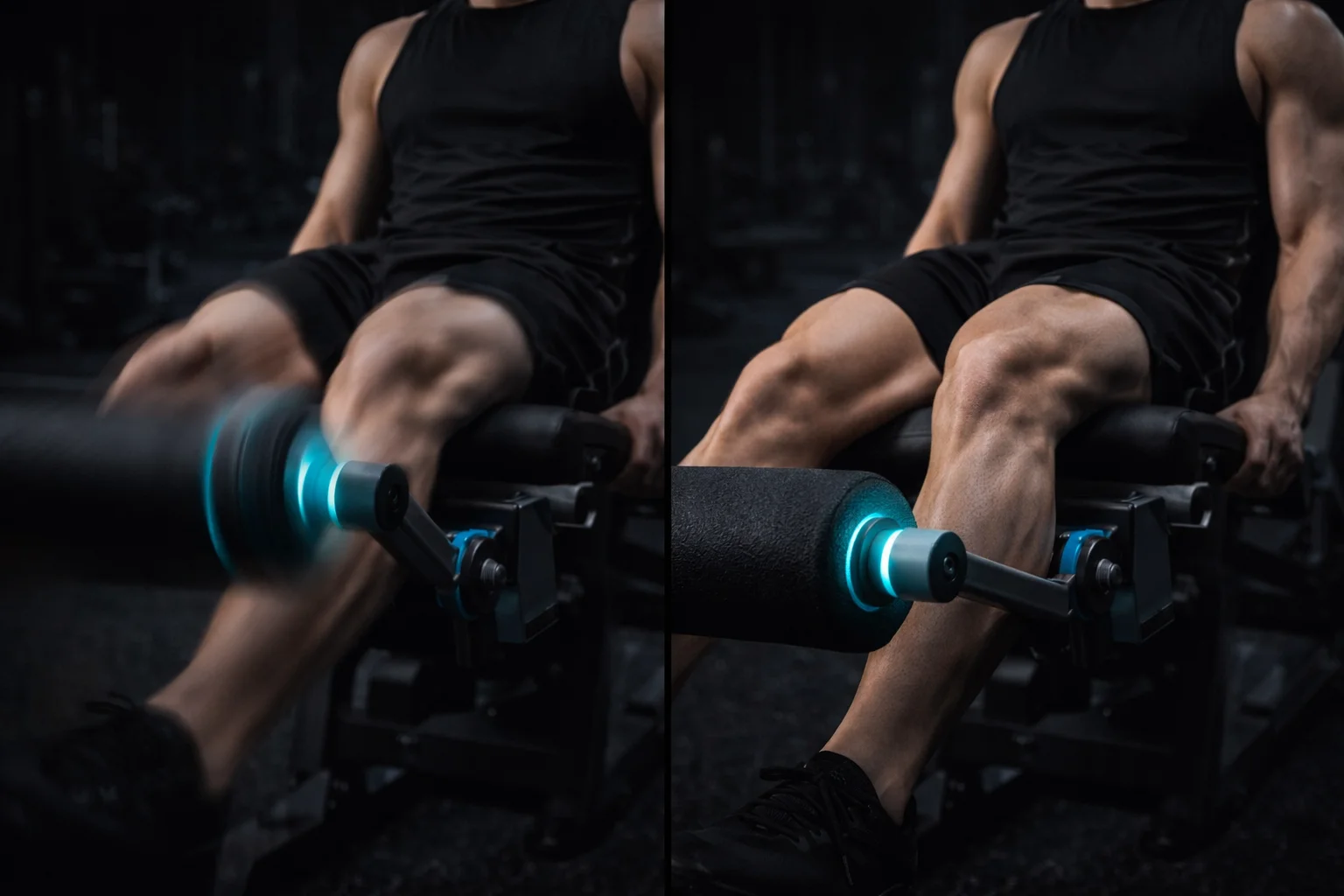
You've heard it a thousand times: "Slow down your reps for maximum muscle growth." Or maybe you've been told the opposite: "Fast, explosive reps build real strength." Walk into any gym and you'll find confident adherents to both camps, each convinced their tempo is superior. Trainers build programs around tempo prescriptions. Online coaches charge premium prices for "optimal" tempo schemes.
Yet when you ask for evidence, the answers get vague. "Time under tension," they'll say. "Mechanical tension accumulation." "Power development." The explanations sound scientific, but they're rarely backed by controlled comparisons that isolate tempo as the variable being tested.
The truth is that most tempo recommendations rest on intuition, biomechanical theory, or extrapolation from acute studies rather than long-term training trials. Slow reps feel harder, so they must build more muscle, right? Fast reps move more weight, so they must build more strength, right? Maybe. Or maybe we've been overthinking a variable that matters less than we assume.
A randomized controlled trial directly tested whether eccentric repetition tempo - the speed of the lowering phase - meaningfully alters muscle hypertrophy and strength gains when other training variables are held constant. The researchers had participants train knee extensions with either fast or slow eccentric tempos over multiple weeks, carefully controlling load, volume, and frequency. The results challenge the tempo dogma that dominates training discussions.
The Research Question: Does Lowering Speed Matter?
The study's primary objective was focused and practical: determine whether eccentric contraction speed influences long-term training adaptations in muscle size and strength.
Specifically, researchers examined whether performing knee extension training with a slow eccentric tempo versus a fast eccentric tempo leads to different outcomes in:
- Muscle thickness - measured via ultrasound as a direct proxy for hypertrophy
- Maximal strength - assessed through one-repetition maximum testing
The eccentric phase was selected because it's the portion of the lift where tempo debates are most heated. Eccentric contractions can produce high force at relatively low metabolic cost and are often emphasized for muscle growth in popular training programs.
Why Eccentric Tempo? The lowering phase is where most tempo manipulation occurs in practice. Lifters might take 1-2 seconds to lower a weight or deliberately extend it to 3-5 seconds for "more time under tension." This study tested whether that deliberate slowing produces measurably better results.
Study Design: Isolating Tempo as the Variable
Randomized Controlled Trial Structure
The researchers conducted a randomized controlled trial in healthy adults performing structured knee extension resistance training. Participants were randomly assigned to different eccentric tempo conditions while other training variables were standardized to isolate tempo as the factor being tested.
The Tempo Conditions: Fast vs Slow Lowering
The defining difference between groups was the speed of the eccentric (lowering) phase:
| Condition | Eccentric Tempo | Concentric Tempo |
|---|---|---|
| Fast Eccentric | ~1-2 seconds (controlled but natural pace) | Consistent across groups |
| Slow Eccentric | ~3-4 seconds (deliberately slowed) | Consistent across groups |
Concentric lifting speed was kept consistent across groups to ensure that differences in outcomes could be attributed primarily to eccentric tempo rather than overall movement speed or total training duration. This design element is critical - it prevents confounding tempo with other variables like total set duration or perceived exertion.
Tightly Controlled Training Protocol
To isolate tempo effects, researchers standardized all other training variables:
- Exercise: Knee extension (isolates quadriceps, easy to measure and control)
- Intensity: Approximately 70% of one-repetition maximum
- Volume: Five sets per session
- Frequency: Consistent training schedule (typically 2-3 sessions per week)
- Rest periods: Matched between groups
- Duration: Multiple weeks of training (sufficient for hypertrophy detection)
By equating load, sets, frequency, and rest, the study minimized confounding factors. If outcomes differ, it's because of tempo, not because one group trained with more volume, intensity, or frequency.
Comprehensive Outcome Assessment
Researchers measured adaptations using established, objective methods:
- Muscle thickness - assessed via ultrasound imaging of quadriceps muscles:
- Vastus lateralis (outer thigh)
- Rectus femoris (center, superficial)
- Vastus medialis (inner thigh, near knee)
- Maximal strength - measured through one-repetition maximum knee extension testing
Some studies in this research area also monitor total time under tension, mechanical work performed, and rating of perceived exertion, but the primary outcomes for training adaptation are muscle size and strength capacity.
Results: Tempo Matters Less Than Expected
The findings revealed a consistent pattern across measurements: both tempo conditions worked, and differences between them were modest at best.
Muscle Hypertrophy: Growth Occurred Regardless of Tempo
Both eccentric tempo conditions produced clear increases in muscle thickness over the training period, confirming that the program and loading were effective for stimulating hypertrophy:
- Vastus lateralis: Increased in size in both fast and slow eccentric groups with similar magnitude
- Rectus femoris: Grew comparably in both conditions
- Vastus medialis: Showed a slightly greater increase with the slower eccentric tempo
The vastus medialis finding is interesting but requires context. This single muscle head showed a modest advantage for slow tempo, but this effect was localized rather than reflecting a global hypertrophy advantage across the entire quadriceps group.
Key Finding: Overall hypertrophy was similar between fast and slow eccentric tempos. The muscle doesn't distinguish between a 2-second or 4-second lowering phase when the load and total volume are matched. Both stimuli trigger growth.
Strength Gains: No Tempo Advantage
Maximal strength testing revealed an even clearer pattern of equivalence:
- Both groups demonstrated significant increases in one-repetition maximum knee extension strength from baseline
- No consistent or large difference in strength gains between fast and slow eccentric tempos
- Improvements were statistically and practically similar regardless of lowering speed
In other words, deliberately slowing down the lowering phase did not translate into superior maximal strength development when load, sets, and frequency were matched. The nervous system adapted to the training stimulus regardless of whether each rep took 3 seconds or 6 seconds total.
The Dominant Pattern: Consistency, Not Divergence
Across both hypertrophy and strength measures, the overwhelming pattern was similarity rather than difference. Both tempos worked effectively for building muscle and strength. The differences between them were small, inconsistent across muscle regions, and not large enough to support claims that one tempo is categorically superior.
What This Study Actually Proves
Within the carefully defined scope of this randomized trial examining knee extension training, the evidence supports a clear and practically important conclusion:
When eccentric tempo is varied within practical training ranges (1-2 seconds vs 3-4 seconds) but training load, volume, and frequency are controlled, muscle growth and strength gains occur regardless of whether the eccentric phase is fast or slow. Any differences observed are small and region-specific, not large enough to support claims that one tempo is categorically superior.
This finding directly challenges the common assertion that slow reps are essential for muscle growth or that tempo is a make-or-break training variable.
Mechanistic Interpretation: Why Tempo Matters Less
Primary Drivers of Adaptation Dominate
The findings suggest that eccentric tempo, within practical ranges, is a secondary variable in determining long-term muscle and strength adaptations. Instead, the primary drivers appear to be:
- Mechanical load - the absolute weight being lifted relative to capacity
- Total training volume - sets × reps × load accumulated over time
- Progressive overload - systematically increasing training demands
- Proximity to failure - how close sets are taken to muscular fatigue
When these variables are adequate, tempo variations within reasonable ranges don't substantially alter the growth signal or strength adaptation trajectory.
Time Under Tension: Not the Whole Story
A common argument for slow repetitions is increased time under tension (TUT). The logic seems sound: more time under load should create more mechanical stimulus and more muscle damage, driving greater adaptation.
This study suggests that simply extending the eccentric phase by a few seconds doesn't automatically translate into greater hypertrophy when mechanical load and total volume are matched. TUT alone, without corresponding increases in mechanical tension or metabolic stress, may not be as critical as commonly believed.
The muscle appears to respond primarily to the challenge imposed by the load and volume, not the clock.
Regional Adaptation: A Subtle Effect
The slightly greater vastus medialis growth with slower eccentric tempo suggests that regional muscle adaptations can occur with tempo manipulation. However, this effect was:
- Modest in magnitude
- Limited to one muscle head
- Not mirrored in overall quadriceps hypertrophy or strength
This implies that tempo adjustments may fine-tune stimulus distribution or preferentially target specific muscle regions rather than fundamentally redefining overall adaptation. This could be useful for addressing weak points but doesn't support broad superiority claims.
What This Study Does NOT Claim
To avoid overinterpretation, several important boundaries must be clearly defined:
Doesn't Test Extreme Tempos
The study examined practical tempo variations (roughly 1-2 seconds vs 3-4 seconds for eccentrics). It does not evaluate extreme tempos such as:
- Ultra-slow repetitions lasting 6-10 seconds per phase
- Super-fast, ballistic movements
- Intentionally explosive lifting with minimal eccentric control
Responses at these extremes might differ and weren't tested here.
Doesn't Claim Tempo Is Always Irrelevant
The findings don't establish that tempo is meaningless in all contexts or for all training goals. Tempo might still matter for:
- Skill acquisition - learning proper movement patterns
- Injury prevention - controlling loads safely
- Power development - training velocity-specific adaptations
- Sport-specific preparation - mimicking competition demands
Limited to Knee Extension
The study used knee extensions, an isolation exercise with a fixed movement path. Results might differ for:
- Compound multi-joint exercises (squats, deadlifts, bench press)
- Free weight movements requiring stabilization
- Exercises with different force curves or leverage profiles
No Acute Molecular Data
The study measured long-term adaptations (muscle size, strength) but didn't assess acute molecular signaling like mTOR activation, muscle protein synthesis rates, or inflammatory responses immediately post-exercise. It's possible that different tempos create different acute responses that don't translate to different chronic outcomes.
Practical Applications: Rethinking Tempo Priorities
Focus on What Actually Matters
For lifters focused on muscle growth or strength development, this study reinforces that energy should be directed toward variables with clearer evidence of impact:
- Consistent training volume - accumulating enough sets and reps over time
- Appropriate loading - using weights that challenge the target rep ranges
- Progressive overload - systematically increasing demands as adaptation occurs
- Training frequency - hitting muscles often enough to drive adaptation
- Exercise selection - choosing movements that effectively load target muscles
Tempo sits well below these variables in terms of impact on outcomes. Optimizing tempo before nailing these fundamentals is putting the cart before the horse.
Tempo as a Tool, Not a Rule
This doesn't mean tempo is useless or should be completely ignored. Tempo can serve useful purposes as a training tool:
- Movement control - slower tempos help beginners learn proper form
- Injury risk management - controlled lowering reduces impact forces
- Exercise variation - changing tempo provides novel stimulus without changing exercises
- Mind-muscle connection - slower reps may enhance proprioceptive awareness
- Technique reinforcement - deliberate tempo emphasizes positions and patterns
These are legitimate applications. But they're supporting roles for tempo, not primary drivers of muscle growth or strength gain.
Practical Flexibility Without Penalty
The findings provide reassurance: trainees can use slightly faster or slower eccentrics based on preference, exercise selection, or programming variation without fear of compromising results, provided training quality and progression are maintained.
This flexibility matters practically. Some exercises naturally lend themselves to different tempos. Deadlifts are typically lowered faster than Romanian deadlifts. Squats might be performed with controlled but not excessively slow eccentrics. The data suggest these natural tempo variations don't compromise adaptations as long as the movement remains controlled and the load is appropriate.
Study Limitations Worth Noting
Time Under Tension Confounding
Isolating tempo perfectly is difficult because changing repetition speed affects total time under tension per set. While this trial attempted to control for such factors by matching load and set volume, complete isolation is challenging. Longer time under tension might alter metabolic stress or fatigue accumulation in ways not fully accounted for.
Population-Specific Responses
Responses to tempo manipulations may differ between untrained individuals (who respond to almost any reasonable stimulus) and experienced lifters (who might be more sensitive to subtle programming variables). The study doesn't establish whether advanced trainees show different tempo sensitivity.
Interaction Effects Not Explored
Tempo interacts with other training variables in complex ways:
- Concentric tempo combined with eccentric tempo
- Tempo combined with different rest intervals
- Tempo combined with different exercise types
- Tempo effects at different points in periodized programs
These interactions remain underexplored and could influence outcomes in more complex, real-world training contexts.
The Bigger Picture: Challenging Tempo Dogma
This research exemplifies a common pattern in exercise science: variables that generate strong opinions and detailed prescriptions often matter less than assumed when rigorously tested under controlled conditions.
Tempo has been treated as a critical variable worthy of precise prescription (2-0-2-0, 3-1-1-0, 4-0-1-2, etc.). Entire training systems are built around tempo manipulation. But when tempo is isolated and tested against itself with other variables controlled, the dramatic differences expected don't materialize.
Other examples of this pattern in training science:
- Exercise order - matters less than expected when volume is matched
- Rest intervals - wide ranges work similarly for hypertrophy when volume is equated
- Training split - total weekly volume per muscle matters more than how it's distributed
The common lesson: the training variables that generate the most debate often have smaller practical effects than the fundamentals everyone agrees on but doesn't discuss as much.
Summary: Speed Matters Less Than You Think
This randomized controlled trial provides clear, actionable evidence on a widely debated training variable.
Primary finding: Slow and fast eccentric tempos during knee extension training produced similar increases in muscle thickness and strength, with only minor region-specific differences that don't support broad superiority claims for either approach.
Mechanism: Moderate tempo variations within practical training ranges (1-2 seconds vs 3-4 seconds for eccentrics) do not dramatically alter hypertrophy or strength outcomes when mechanical load, training volume, and progressive overload are equated. Primary drivers of adaptation (load, volume, consistency) dominate over tempo effects.
Practical implication: Use tempo as a tool for movement control, exercise variation, and technique reinforcement, but prioritize progressive overload, adequate volume, and training consistency. Don't obsess over precise tempo prescriptions or believe that slow reps are essential for growth.
Bottom line: The tempo debates that dominate gym conversations and online training forums are largely overblown. Whether you lower a weight in 2 seconds or 4 seconds matters far less than whether you're consistently training with appropriate loads, accumulating sufficient volume, and progressively overloading over time. Tempo flexibility is fine. Tempo dogma is unnecessary. In resistance training, how much and how consistently you train still vastly outweighs how slowly you lower the weight.
References and Further Reading
- Schoenfeld BJ, Ogborn DI, Krieger JW. Effect of repetition duration during resistance training on muscle hypertrophy: a systematic review and meta-analysis. Sports Medicine. 2015;45(4):577-585. PMID: 25601394
- Wilk M, Gepfert M, Krzysztofik M, et al. Technical and training related aspects of resistance training using blood flow restriction: a review. Journal of Human Kinetics. 2018;65:249-260. PMID: 30687431
- Burd NA, Andrews RJ, West DW, et al. Muscle time under tension during resistance exercise stimulates differential muscle protein sub-fractional synthetic responses in men. Journal of Physiology. 2012;590(2):351-362. PMID: 22106173