
Do Masks Suffocate Workouts? Science Says It's Safe
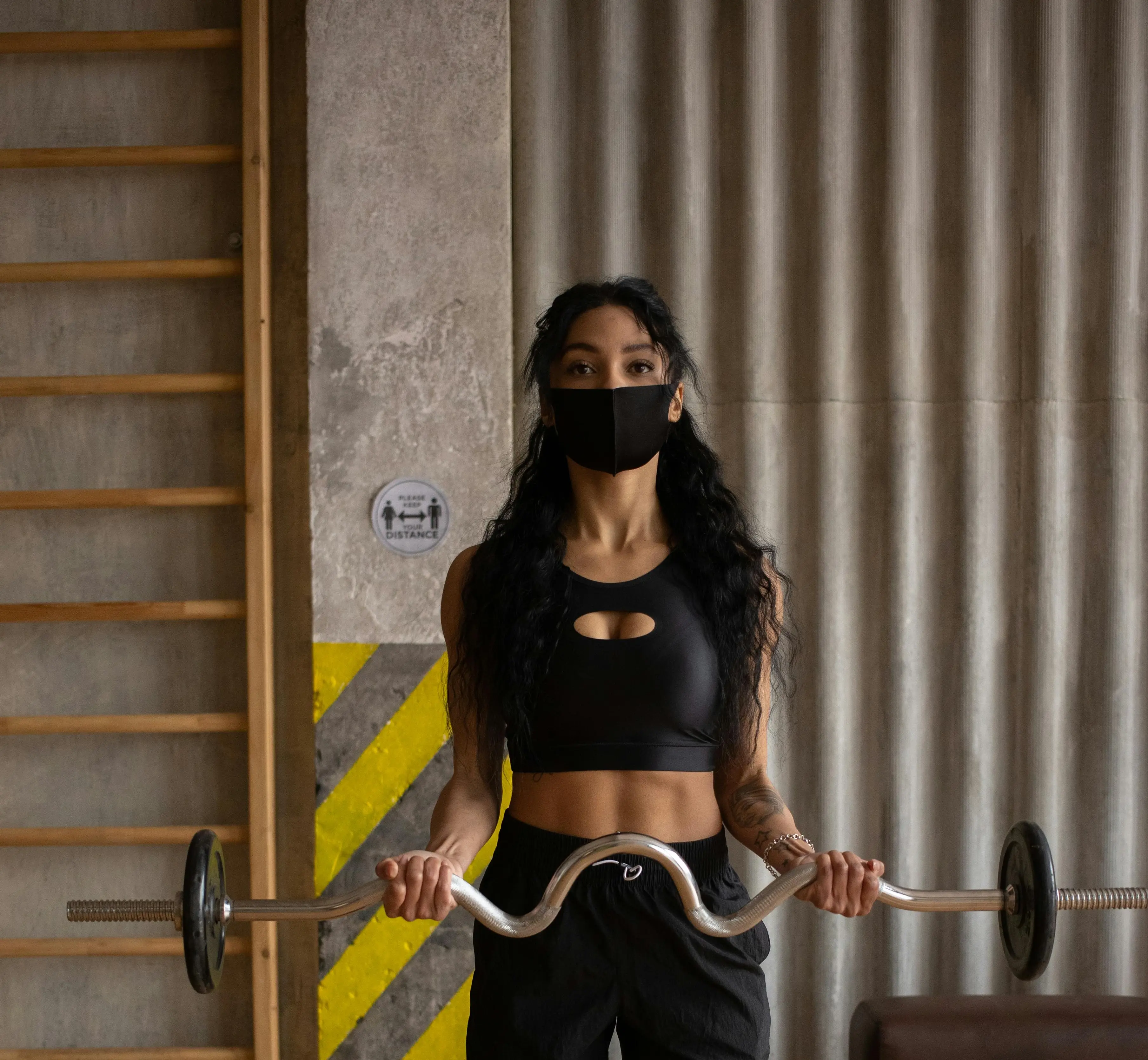
The gym debate over masks turned surprisingly vicious. Claims flooded social media that masks during exercise would suffocate people, dangerously reduce oxygen levels, send heart rates skyrocketing, and potentially cause serious harm. People shared screenshots of pulse oximeters supposedly showing plummeting oxygen saturation. Gym-goers filmed themselves hyperventilating through masks as supposed evidence of danger.
The underlying logic seemed sound enough to many people: restrict airflow by covering the mouth and nose, and oxygen delivery must drop. The heart must work harder to compensate. Performance inevitably suffers. And if you're pushing hard enough, maybe something dangerous happens.
But intuition about respiratory physiology is often wrong. The human cardiorespiratory system is remarkably adaptable, with multiple compensatory mechanisms to maintain oxygen delivery even when breathing mechanics are altered. Whether those mechanisms are sufficient to handle the airflow resistance imposed by masks during exercise is not a question you can answer with gut feelings or cherry-picked anecdotes.
You need controlled measurements. You need to actually test oxygen saturation, heart rate, and performance under standardized conditions with and without masks. You need a randomized crossover design where each participant serves as their own control across multiple mask types.
Researchers did exactly that. They had healthy adults exercise under four conditions: no mask, cloth mask, surgical mask, and FFP3 respirator (the most restrictive type). They continuously monitored oxygen saturation and heart rate throughout exercise and tracked whether participants could maintain performance. The design directly tested the suffocation hypothesis with objective physiological data rather than speculation.
The results provide a definitive answer to the question many people still debate: are workouts physiologically safe when wearing a mask?
The Research Question: Do Masks Compromise Exercise Physiology?
The study's objective was focused and clinically relevant: determine whether wearing common face masks during exercise meaningfully alters key physiological variables that indicate cardiovascular or respiratory compromise.
Specifically, researchers tested whether cloth masks, surgical masks, or FFP3 respirators during exercise:
- Reduce oxygen saturation (SaO₂) - the percentage of hemoglobin in arterial blood that's saturated with oxygen, measured via pulse oximetry
- Increase heart rate to potentially unsafe levels - elevated heart rate could indicate cardiovascular strain if the heart is compensating for inadequate oxygen delivery
- Impair exercise performance - measured by ability to sustain prescribed speed and distance
Critically, the researchers didn't just look for statistically significant differences. They established predefined clinical safety margins based on what would actually constitute physiological danger, ensuring that any observed changes were evaluated for clinical relevance, not just statistical significance.
Why These Measures Matter: Oxygen saturation below 90% is considered clinical hypoxemia requiring intervention. Normal SaO₂ during exercise in healthy people is 95-100%. Similarly, unexpectedly elevated heart rate during submaximal exercise suggests cardiovascular stress or inadequate oxygen delivery forcing cardiac compensation.
Study Design: Rigorous Crossover Testing
Randomized Crossover Design Eliminates Individual Variation
The trial used a randomized crossover design, one of the strongest approaches for this type of question. Each participant completed all four experimental conditions:
| Condition | Mask Type | Filtration Level |
|---|---|---|
| No Mask | Control condition | None |
| Cloth Mask | Multi-layer fabric covering | Low-moderate filtration |
| Surgical Mask | Medical-grade disposable | Moderate filtration |
| FFP3 Respirator | High-filtration respirator | High filtration (~99% particles) |
The order of conditions was randomized, and sessions were separated by sufficient recovery time to avoid carryover effects from previous exercise bouts. This design is exceptionally powerful because each participant serves as their own control, eliminating variability from individual differences in fitness, body composition, or cardiorespiratory capacity.
Participants: Healthy Adults Without Confounding Conditions
The study enrolled healthy young adults with no known cardiopulmonary disease. This population selection was deliberate - it isolates the effects of mask-wearing itself without confounding variables from chronic conditions that independently affect breathing, oxygen transport, or cardiovascular function.
Testing in healthy individuals first establishes baseline safety. If masks caused problems in healthy people with optimal cardiorespiratory function, that would be a major red flag. If they're safe in this population, questions about other demographics can be addressed separately.
Standardized Exercise Protocol Across All Conditions
Participants performed continuous moderate-to-high intensity exercise with critical standardization:
- Identical workload - same speed, resistance, and duration across all four conditions
- No self-pacing allowed - participants couldn't slow down to compensate for perceived difficulty
- Continuous monitoring - physiological variables tracked throughout exercise, not just at endpoints
This ensures that any observed physiological differences are attributable to the mask condition, not changes in exercise intensity or effort between trials.
Objective Physiological Measurements
Throughout each exercise session, researchers continuously or repeatedly measured:
- Oxygen saturation (SaO₂) - via pulse oximetry, the same technology used in hospitals to monitor patient oxygenation
- Heart rate - continuously tracked via heart rate monitor
- Exercise performance - ability to maintain prescribed speed and complete the required distance
The focus was on objective physiological markers that directly indicate whether oxygen delivery and cardiovascular function are adequate, not subjective feelings of breathlessness or discomfort.
Results: Masks Don't Suffocate Exercisers
Oxygen Saturation Remains Safe Across All Mask Types
The most feared outcome - dangerous drops in blood oxygen levels during masked exercise - simply didn't occur.
Key findings on oxygen saturation:
- Across all mask conditions, changes in oxygen saturation did not exceed a non-inferiority margin of 2% compared to exercising without a mask
- Small reductions were observed in some conditions:
- Cloth mask: minor decrease below 1%
- FFP3 respirator: minor decrease below 1%
- Surgical mask: minimal to no change
- All values remained well within normal physiological ranges (typically 95-100% in healthy exercising adults)
- No participant approached hypoxemic thresholds (SaO₂ < 90%) that would indicate clinical danger
In practical terms, oxygen delivery to the blood was preserved even when breathing through high-filtration masks during sustained exercise. The feared suffocation effect doesn't manifest in measurable blood oxygen levels.
Clinical Context: A 1% drop in oxygen saturation from 98% to 97% is trivial and within measurement variability. Clinical concern begins when SaO₂ drops below 90% or shows progressive decline. Neither occurred in any mask condition tested.
Heart Rate Response: No Dangerous Cardiac Strain
Another persistent claim - that masks force the heart to work dangerously hard to compensate for impaired oxygen delivery - also failed to materialize in the data.
Average heart rate changes compared to no mask:
| Mask Type | Heart Rate Change | Clinical Significance |
|---|---|---|
| Cloth Mask | ~0.10 beats per minute | Negligible |
| Surgical Mask | ~0.78 beats per minute | Negligible |
| FFP3 Respirator | ~2.84 beats per minute | Negligible |
None of these changes exceeded predefined safety margins or reached levels indicating cardiovascular compromise. For context, heart rate naturally varies by 5-10 beats per minute simply from measurement timing, hydration status, or ambient temperature. The mask-induced changes were smaller than normal physiological noise.
Even with the most restrictive FFP3 respirator, the heart rate response remained within expected exercise physiology norms for the prescribed workload. There's no evidence of cardiac strain or compensatory tachycardia (abnormally elevated heart rate) due to inadequate oxygenation.
Exercise Performance: No Premature Fatigue or Decline
Performance metrics provided an additional functional check on whether masks impair the physiological capacity to sustain exercise:
- Participants maintained similar exercise speed and distance across all mask and no-mask conditions
- No evidence of premature fatigue or inability to complete prescribed workouts attributable to mask use
- Time to exhaustion and sustained power output showed no clinically meaningful differences
If masks were significantly impairing oxygen delivery or cardiovascular function, we'd expect to see performance decline - participants slowing down, stopping early, or showing signs of excessive fatigue. That didn't happen. The ability to perform work remained intact.
What the Science Actually Proves
Within the carefully defined scope of this randomized crossover trial, the evidence firmly supports several conclusions:
- Masks don't cause hypoxemia during exercise - wearing cloth masks, surgical masks, or FFP3 respirators during moderate-to-high intensity exercise does not meaningfully reduce oxygen saturation in healthy adults
- Masks don't cause dangerous cardiac strain - heart rate responses remain within safe, expected ranges across all mask types tested
- Exercise performance is maintained - participants can complete prescribed workouts at the same intensity regardless of mask condition
Taken together, these findings directly refute claims that masks "suffocate" exercisers in any physiological sense. The dramatic predictions of plummeting oxygen levels and cardiovascular overload don't align with measured reality.
Why Don't Masks Impair Oxygen Delivery?
Cardiorespiratory Compensation Mechanisms
The results demonstrate that the human cardiorespiratory system can compensate effectively for the minor airflow resistance imposed by masks during exercise. Several physiological mechanisms likely contribute:
- Increased ventilatory effort - breathing muscles work slightly harder to move air through the mask, but this is well within their capacity
- Breathing pattern adjustments - subtle changes in tidal volume or breathing frequency maintain adequate ventilation
- Preserved alveolar gas exchange - despite mask resistance at the mouth and nose, oxygen diffusion in the lungs remains efficient
- Adequate oxygen reserves - the margin of safety in oxygen delivery systems is substantial in healthy people
These compensations occur automatically and unconsciously, maintaining stable oxygen saturation without requiring conscious effort or producing dangerous cardiovascular stress.
Perception vs Reality: Discomfort Is Not Danger
The study highlights a critical distinction that explains much of the mask controversy:
Subjective sensations:
- Feeling short of breath or "air-hungry"
- Sensation of increased breathing effort
- Heat and moisture discomfort
- Feeling like you're not getting enough air
Objective physiological markers:
- Blood oxygen saturation remains normal
- Heart rate stays within expected ranges
- Performance capacity is preserved
- No signs of hypoxemia or cardiovascular distress
The disconnect between how breathing feels and what's actually happening physiologically is profound. Masks alter the sensory feedback from breathing - the feeling of airflow across the face, the moisture and temperature of inspired air, the proprioceptive sense of chest expansion. These sensory changes create a perception of breathlessness even when gas exchange is adequate.
Humans are not good at intuitively assessing their own blood oxygen levels. We rely on respiratory sensations that can be misleading. The discomfort is real, but it doesn't indicate physiological danger in healthy individuals.
What This Study Does NOT Prove
To avoid overinterpretation and clearly define the boundaries of evidence:
Not Tested: Maximal Intensity Exercise
The study examined moderate-to-high intensity sustained exercise, not:
- All-out sprints or maximal effort intervals
- Competitive athletic performance at physiological limits
- Exercise requiring peak ventilatory capacity
Whether masks affect performance at absolute maximal intensities remains a separate question.
Not Generalized: Special Populations
The findings apply to healthy adults. They cannot be automatically extended to:
- People with chronic respiratory disease - asthma, COPD, pulmonary fibrosis, or other lung conditions
- Individuals with cardiovascular disease - heart failure, coronary artery disease, arrhythmias
- Children - who have different respiratory mechanics and smaller airway volumes
- Older adults - whose cardiorespiratory reserve may be reduced
Safety in these populations requires separate evaluation with appropriate medical oversight.
Not Measured: Detailed Ventilatory Mechanics
The study focused on clinically relevant markers (oxygen saturation, heart rate, performance) but didn't assess:
- End-tidal CO₂ or carbon dioxide retention concerns
- Detailed breathing patterns and respiratory mechanics
- Work of breathing or respiratory muscle fatigue
- Long-term effects of repeated masked exercise
Not Addressed: Infection Prevention or Public Health Policy
This study establishes physiological safety of masked exercise in healthy adults. It does not evaluate:
- Whether masks effectively reduce viral transmission in gym settings
- Public health cost-benefit analyses of mask policies
- Compliance, adherence, or psychological effects of mask requirements
Those are separate questions requiring different study designs and evidence.
Practical Implications for Gym-Goers and Athletes
Safety Reassurance for Healthy Exercisers
For healthy individuals exercising in environments where masks are required or recommended, the evidence provides clear reassurance:
- Your oxygen levels will remain normal
- Your heart rate responses will stay within safe ranges
- You can maintain your workout intensity and performance
- You're not causing physiological harm by exercising with a mask
From a cardiorespiratory physiology standpoint, workouts are safe under masked conditions for this population.
Managing Discomfort Without Misinterpreting Danger
You may still experience subjective discomfort when exercising with a mask:
- Sensation of increased breathing effort or air hunger
- Heat and moisture accumulation around the face
- Higher rating of perceived exertion at the same workload
- Reduced enjoyment or motivation
These experiences are valid and can affect adherence and psychological well-being. But they don't reflect dangerous physiological changes. Distinguishing discomfort from danger helps make informed decisions rather than panicked ones.
Mask Type Matters Less Than Expected for Physiology
Although FFP3 respirators are considerably more restrictive than cloth or surgical masks in terms of airflow resistance, even this high-filtration condition didn't produce clinically meaningful changes in oxygen saturation or heart rate.
This suggests a wide physiological margin of safety across common mask types for healthy exercisers. Differences between mask types may affect comfort and perceived effort more than actual cardiorespiratory function.
The Bigger Picture: Evidence vs Viral Misinformation
The mask-during-exercise controversy exemplifies how quickly misinformation spreads when it aligns with existing anxieties or political narratives. Cherry-picked pulse oximeter readings, misinterpreted as dangerous hypoxemia, went viral despite being artifacts of movement, poor sensor placement, or measurement during breath-holding.
Controlled trials with continuous monitoring, standardized conditions, and appropriate statistical analysis tell a very different story. The dramatic oxygen plunges and cardiovascular crises predicted by mask opponents don't appear in rigorous data. Physiology doesn't care about ideology, and the cardiorespiratory system compensates effectively for the minor airflow resistance masks impose.
This doesn't mean masks are comfortable during exercise or that discomfort doesn't affect adherence. It means the specific claims about suffocation, hypoxemia, and cardiovascular danger are not supported by measured physiology in healthy adults exercising at moderate-to-high intensities.
Summary: Measured Physiology vs Gym Folklore
This randomized crossover trial provides definitive evidence on a question that generated far more heat than light during public health debates.
Primary finding: Wearing cloth masks, surgical masks, or FFP3 respirators during moderate-to-high intensity exercise does not meaningfully alter oxygen saturation (changes < 1%) or heart rate (changes < 3 bpm) compared to exercising without a mask in healthy adults. Exercise performance is maintained across all conditions.
Mechanism: The human cardiorespiratory system effectively compensates for minor airflow resistance through adjustments in ventilatory effort and breathing patterns, maintaining adequate alveolar gas exchange and oxygen delivery without requiring dangerous cardiac compensation. Subjective sensations of breathlessness reflect altered respiratory mechanics and sensory feedback, not actual hypoxemia.
Practical implication: For healthy individuals, exercising with a mask is physiologically safe at moderate-to-high intensities, even with high-filtration respirators. Discomfort and increased perceived exertion are real but don't indicate physiological danger. Medical consultation is advised for individuals with pre-existing cardiorespiratory conditions.
Bottom line: The dramatic claims that masks suffocate exercisers, dangerously reduce oxygen levels, or overload the heart are not supported by direct physiological measurements in controlled trials. Masks may alter how breathing feels, but they don't compromise oxygen delivery, heart function, or exercise capacity in healthy adults during typical gym workouts. When it comes to masks and exercise, measured physiology tells a very different story than viral social media posts and gym folklore. The discomfort is real. The danger is not.
References and Further Reading
- Epstein D, Korytny A, Isenberg Y, et al. Return to training in the COVID-19 era: The physiological effects of face masks during exercise. Scandinavian Journal of Medicine & Science in Sports. 2021;31(1):70-75. PMID: 32969531
- Shaw K, Butcher S, Ko J, Zello GA, Chilibeck PD. Wearing of cloth or disposable surgical face masks has no effect on vigorous exercise performance in healthy individuals. International Journal of Environmental Research and Public Health. 2021;18(8):3904. PMID: 33917381
- Person E, Lemercier C, Royer A, Reychler G. Effect of a surgical mask on six minute walking distance. Revue des Maladies Respiratoires. 2018;35(3):264-268. PMID: 29395560