
One Extra Hour of Sleep Boosts Morning Performance - and It's Proven
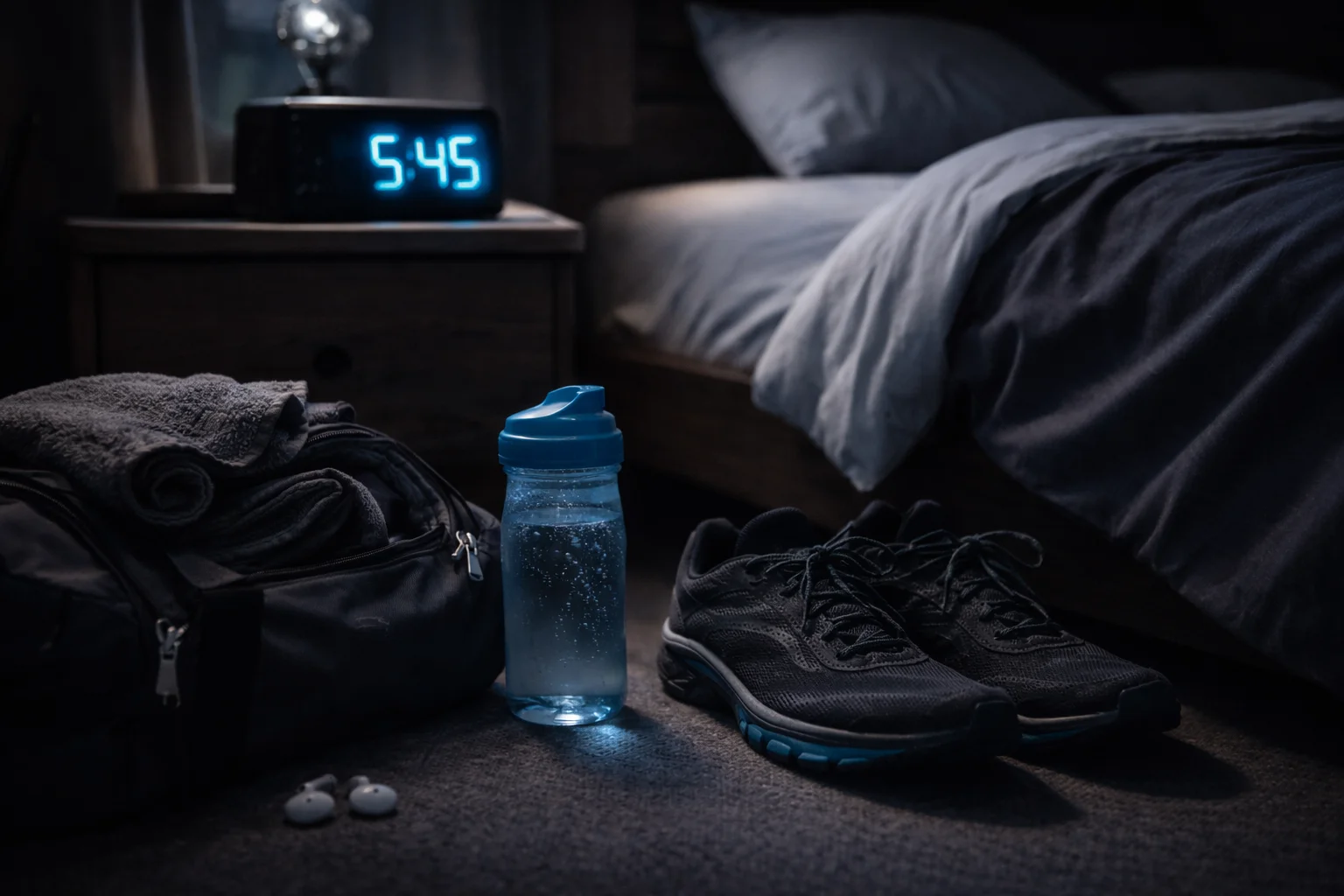
Your training plan is periodized down to weekly microcycles. You track macros to the gram. You debate supplement timing and dosing with near-religious intensity. Yet when your alarm goes off at 5:30 AM for morning training, and you've slept five and a half hours because you stayed up scrolling or finishing work, you shrug it off. "I'll catch up on the weekend," you tell yourself. "Sleep matters, but not as much as hitting this workout."
This hierarchy is backward. Training quality matters, nutrition matters, but sleep is the foundation that determines whether everything else actually works. Yet in practice, sleep gets treated as the most negotiable variable in the performance equation. Need an extra hour to finish something? Take it from sleep. Want to watch one more episode? Sleep can wait. Early morning workout scheduled? Sleep loss is just the price of commitment.
For physically active people - especially university students, early-career athletes, and recreational competitors juggling training with jobs and responsibilities - chronic mild sleep restriction is almost a cultural norm. The assumption seems plausible enough: missing an hour or so regularly probably has minimal impact as long as training volume and nutrition remain consistent. After all, you've done it for months or years and still make progress.
But "making progress despite inadequate sleep" is different from "optimizing progress with adequate sleep." The question isn't whether you can function on six hours - clearly you can. The question is what you're leaving on the table by not getting seven or eight.
A randomized crossover trial published in peer-reviewed literature directly tested this question with remarkable precision. Researchers had physically active university students complete two experimental nights in random order: one following their normal sleep schedule, another where they extended sleep by approximately 55 minutes. Everything else remained constant - same participants, same testing protocols, same time of day. The only variable that changed was one extra hour of sleep.
The next morning, researchers tested physical performance (shuttle run, squat jumps) and cognitive function (reaction time, attention). The results weren't subtle. A single night with roughly one extra hour of sleep significantly improved shuttle-run distance, reduced fatigue during high-intensity efforts, increased explosive power, accelerated reaction time, and enhanced attention compared to normal sleep.
This wasn't a study of extreme sleep deprivation versus full recovery. This was realistic sleep extension - from around 8 hours to 8.9 hours - producing measurable next-day benefits in people who weren't severely sleep-deprived at baseline. The implications are clear and uncomfortable: you're probably leaving significant performance on the table every morning you train on less sleep than you could have gotten.
The Research Question: Can One Night Change Tomorrow's Performance?
The study's objective was precise, practical, and immediately relevant to anyone who trains early: determine whether a single night of extended sleep improves next-morning physical and cognitive performance compared to habitual sleep in active young adults.
Specifically, researchers tested whether increasing total sleep time by approximately 55 minutes for one night would improve:
- Shuttle-run performance - maximal distance covered in repeated high-intensity running (assessing aerobic capacity and anaerobic tolerance)
- Fatigue resistance - performance decline across multiple shuttle-run efforts
- Explosive power - squat jump height (lower-body power output)
- Reaction time - speed of information processing and motor response
- Attention and processing speed - digit-cancellation test performance
Critically, all performance testing occurred the following morning at 8 AM - the exact time when circadian factors, residual sleep inertia, and accumulated sleep debt typically impair performance most. If sleep extension matters practically, morning performance is where the effects should appear.
Why Morning Testing Matters: Most studies test performance in the afternoon when circadian rhythms naturally enhance alertness and physical capacity. But many people train, compete, or have cognitively demanding tasks early in the day when performance is naturally compromised. Demonstrating benefits specifically at 8 AM makes the findings directly applicable to real-world training schedules.
Study Design: Crossover Control With Objective Sleep Measurement
Randomized Within-Subjects Crossover Design
The researchers used a within-subjects randomized crossover design, meaning each participant completed both sleep conditions in random order. This powerful approach eliminates between-person variability in:
- Baseline fitness and training status
- Natural sleep need and circadian preferences (chronotype)
- Motivation and effort during testing
- Response to testing environment and protocols
Each person serves as their own control, making the comparison exceptionally clean.
Participants: Active Students, Not Elite Athletes
The study enrolled 24 physically active university students with characteristics reflecting common populations who balance training with academic and professional demands:
| Characteristic | Details |
|---|---|
| Total participants | 24 physically active students |
| Gender distribution | 17 men, 7 women |
| Mean age | 22.7 ± 1.6 years |
| Activity level | Regularly physically active, not elite athletes |
This population is highly relevant. These aren't professional athletes with unlimited time for recovery. They're people who train consistently while managing other life demands - exactly the demographic most likely to chronically under-sleep and most likely to benefit from practical sleep optimization strategies.
Sleep Manipulation: Modest Extension, Objective Measurement
Participants completed two experimental conditions in randomized order with sufficient washout between trials:
Condition 1: Normal Sleep Night
- Participants followed their habitual sleep schedule
- No instructions to extend or restrict sleep
- Baseline for comparison
Condition 2: Sleep Extension Night
- Bedtime advanced or wake time delayed to increase total sleep time
- Target: approximately 55 minutes of additional sleep
- Participants instructed but allowed flexibility to achieve extension naturally
Critical methodological strength: Sleep duration was objectively measured using wrist actigraphy (accelerometer-based sleep tracking), not self-report. This ensures accurate quantification and eliminates reporting bias.
Performance Testing Protocol: Comprehensive Morning Assessment
Testing occurred at two time points to establish baseline and detect sleep-related changes:
- Baseline evening testing - approximately 20:00 (8 PM), establishing individual performance capacity
- Morning testing - approximately 08:00 (8 AM) the following day, after either normal or extended sleep night
The testing battery included:
Physical Performance Tests
- Shuttle-run test - repeated maximal-effort runs back and forth between markers until exhaustion, measuring aerobic/anaerobic capacity and sustained high-intensity performance
- Fatigue index - calculated from performance decline across shuttle-run efforts, quantifying fatigue resistance
- Squat jump - maximal vertical jump from squat position, measuring explosive lower-body power
Cognitive Performance Tests
- Simple reaction time - speed of motor response to visual stimulus, assessing information processing speed
- Digit-cancellation test - identifying and marking target digits within time limit, measuring sustained attention and visual processing
This comprehensive battery captures whether sleep benefits are domain-specific (only physical or only cognitive) or systemic (improving multiple performance dimensions).
Results: One Hour Changes Everything
Sleep Duration: The Manipulation Worked
First, confirming that the intervention actually achieved the intended sleep extension:
| Sleep Condition | Total Sleep Time (minutes) | Hours:Minutes |
|---|---|---|
| Normal Sleep | 476.5 ± 64.2 min | ~7 hours 57 minutes |
| Extended Sleep | 531.3 ± 56.8 min | ~8 hours 51 minutes |
| Difference | +54.8 minutes | ~55 minutes more sleep |
The extension was statistically significant (p < 0.001) with a large effect size. Participants successfully achieved roughly one extra hour of sleep without extreme manipulation. Importantly, neither condition involved severe sleep restriction - the "normal" sleep averaged nearly 8 hours, meaning participants weren't chronically sleep-deprived at baseline. The benefits came from optimizing already-reasonable sleep duration.
Shuttle-Run Performance: Dramatic Distance Improvement
The shuttle-run test assesses repeated high-intensity running capacity - a demanding task requiring aerobic endurance, anaerobic tolerance, and mental persistence. This is where sleep effects on physical performance become most apparent:
| Sleep Condition | Best Distance Covered (meters) | Statistical Significance |
|---|---|---|
| Extended Sleep | 102.8 ± 11.9 m | p < 0.001 (highly significant) |
| Normal Sleep | 93.3 ± 8.5 m | |
| Improvement | +9.5 meters (~10% performance increase) | |
This represents a clear, substantial, and highly statistically significant improvement. Participants covered approximately 10% more distance during maximal shuttle-run efforts when they'd slept an extra hour the night before. In practical sports contexts - where margins between winning and losing, making a team or getting cut, or achieving personal records are often much smaller than 10% - this magnitude of effect is game-changing.
Real-World Translation: A 10% improvement in high-intensity running capacity from one night of better sleep is remarkable. For context, training interventions, nutritional strategies, and legal supplements that produce 5% performance improvements are considered highly effective and worth pursuing. Sleeping one extra hour for free produced double that effect overnight.
Fatigue Resistance: Sustained Effort Improves Dramatically
Peak performance matters, but fatigue resistance - the ability to maintain output across repeated efforts - often determines real-world outcomes in sports and training. The fatigue index quantifies performance decline across the shuttle-run test:
| Sleep Condition | Fatigue Index (%) | Interpretation |
|---|---|---|
| Extended Sleep | 13.1 ± 8.3% | Less fatigue, better sustained performance |
| Normal Sleep | 21.2 ± 9.5% | More fatigue, greater performance decline |
| Improvement | -8.1 percentage points | p < 0.001 (highly significant) |
Lower fatigue index values indicate better fatigue resistance - the ability to maintain performance across repeated maximal efforts. With extended sleep, participants showed roughly 38% less fatigue than after normal sleep (8.1 percentage point reduction from 21.2% baseline).
This suggests sleep benefits aren't limited to fresh, initial efforts. The extra hour helped participants maintain quality across the entire demanding test, delaying the point where fatigue compromises output. For training quality, competition performance, or any scenario requiring sustained high-intensity work, this matters enormously.
Explosive Power: Modest but Meaningful Jump Height Increase
The squat jump test measures maximal lower-body explosive power - rapid force production without a countermovement. While improvements were smaller than shuttle-run effects, they remained statistically significant:
| Sleep Condition | Jump Height (cm) | Significance |
|---|---|---|
| Extended Sleep | 28.2 ± 8.0 cm | p = 0.005 |
| Normal Sleep | 26.3 ± 7.2 cm | |
| Improvement | +1.9 cm (~7% increase) | |
A 1.9 cm improvement in vertical jump might seem modest in absolute terms, but context matters. Elite athletes spend years chasing single-centimeter vertical jump improvements through specialized training programs. Achieving a 7% increase from one night of better sleep, without any additional training stimulus, represents remarkable return on investment.
For power-dependent sports (basketball, volleyball, sprinting, Olympic lifting), where maximal force production determines success, even small power advantages compound across competitions and training sessions.
Cognitive Performance: Faster Processing, Better Attention
Physical performance improvements were dramatic, but cognitive effects were equally impressive - and perhaps more universally relevant, since everyone needs to think clearly regardless of athletic pursuits.
Reaction Time: 43 Milliseconds Faster
| Sleep Condition | Reaction Time (ms) | Significance |
|---|---|---|
| Extended Sleep | 252.8 ± 55.3 ms | p < 0.001 |
| Normal Sleep | 296.4 ± 75.2 ms | |
| Improvement | -43.6 ms (~15% faster) | |
Reaction time improved by approximately 44 milliseconds - a 15% reduction in response latency. This is highly statistically significant and practically meaningful across numerous domains:
- Sports performance - faster decision-making and execution in reactive situations (returning serves, defending opponents, responding to game situations)
- Driving safety - quicker hazard detection and brake response
- Academic testing - faster information retrieval and problem-solving
- Workplace performance - improved task switching and response to demands
In high-speed sports, 40 milliseconds can determine whether you make contact with a 90 mph fastball or swing through it. In driving, it's the difference between stopping safely and a collision. These aren't trivial improvements.
Attention and Processing: 7% More Targets Identified
| Sleep Condition | Correct Targets (digit-cancellation) | Significance |
|---|---|---|
| Extended Sleep | 67.6 ± 12.6 | p = 0.006 |
| Normal Sleep | 63.0 ± 10.0 | |
| Improvement | +4.6 targets (~7% increase) | |
The digit-cancellation test measures sustained attention, visual scanning speed, and processing efficiency - cognitive abilities critical for academic work, professional tasks, and maintaining concentration during long training sessions or competitions.
A 7% improvement in attention task performance suggests better cognitive efficiency across the board: faster information processing, better focus maintenance, and reduced mental fatigue during demanding cognitive work.
What the Science Proves
Within the rigorously controlled scope of this randomized crossover trial, the evidence firmly establishes several critical conclusions:
- A single night with approximately 55 minutes of extra sleep significantly improves next-morning physical performance - including 10% better shuttle-run distance, 38% reduction in fatigue during high-intensity efforts, and 7% higher explosive power
- Cognitive function improves substantially with acute sleep extension - 15% faster reaction time and 7% better attention/processing speed the following morning
- Benefits are immediate and require no adaptation period - improvements appeared the very next day without long-term intervention
- Effects are consistent across multiple performance domains - not isolated to one system but improving both physical and cognitive capacities simultaneously
These findings demonstrate that sleep acts as an acute performance modulator, not just a long-term recovery variable. How much you sleep tonight directly determines how well you perform tomorrow morning.
Why Sleep Extension Improves Performance
Physiological Recovery Mechanisms
Sleep extension likely improves performance through multiple interconnected physiological pathways:
Neuromuscular Function
- Enhanced motor unit recruitment - better coordination between nervous system commands and muscle activation
- Improved neuromuscular transmission - more efficient signal propagation from nerves to muscles
- Reduced central fatigue - less inhibition of voluntary activation from brain and spinal cord
Metabolic and Hormonal Restoration
- Glycogen repletion - better muscle and liver glycogen restoration supporting high-intensity efforts
- Anabolic hormone profiles - optimized testosterone, growth hormone, and IGF-1 levels supporting recovery and performance
- Reduced inflammatory markers - lower systemic inflammation improving tissue function
Cognitive and Neural Processing
- Adenosine clearance - removal of sleep-promoting neurotransmitter that accumulates during wakefulness and impairs alertness
- Synaptic homeostasis - optimization of neural connection strength and efficiency
- Prefrontal cortex function - restoration of executive function, attention, and decision-making capacity
Circadian Rhythm Interaction
Morning performance is naturally compromised by circadian factors - body temperature is still rising, cortisol awakening response is still developing, and residual sleep inertia lingers. Sleep extension may partially compensate for these circadian disadvantages by:
- Allowing more complete circadian phase progression before waking
- Reducing sleep debt that amplifies morning performance deficits
- Providing more time for sleep stages (especially REM sleep) that preferentially occur in later sleep cycles
Reduced Homeostatic Sleep Pressure
Sleep pressure accumulates during wakefulness and dissipates during sleep. With extended sleep, homeostatic pressure is lower upon waking, meaning less physiological "sleepiness" competing with performance demands. This allows the body to allocate more resources to performance rather than fighting to maintain wakefulness.
What This Study Does NOT Prove
To avoid overinterpretation and clearly define evidence boundaries:
Not Assessed: Long-Term Training Adaptations
The study examined acute next-day performance effects. It does not establish whether:
- Chronic sleep extension over weeks/months produces cumulative training adaptations beyond acute performance effects
- Better sleep improves hypertrophy, strength gains, or endurance development over training cycles
- Competitive performance outcomes (winning races, making teams, achieving personal records) improve with sustained sleep optimization
Not Tested: Sleep Architecture or Specific Sleep Stages
Sleep was measured via actigraphy (movement-based tracking) which accurately quantifies total sleep time but doesn't assess:
- Time spent in specific sleep stages (light sleep, deep sleep, REM sleep)
- Sleep quality metrics like fragmentation or arousals
- Whether specific sleep stages drive the observed benefits
Not Generalized: Beyond Active Young Adults
Participants were physically active university students aged ~23 years. Findings may not extend to:
- Elite athletes - who may have different baseline sleep quality and recovery demands
- Sedentary individuals - whose performance baseline and sleep effects might differ
- Older adults - with different sleep architecture and recovery kinetics
- Clinical populations - those with sleep disorders or chronic conditions
Not Examined: Afternoon or Evening Performance
Testing focused on morning performance (8 AM). The study doesn't establish whether:
- Similar benefits occur for afternoon or evening training/competition
- Sleep extension effects persist throughout the entire day
- Afternoon performance (when circadian rhythms naturally optimize output) shows smaller or larger sleep sensitivity
Practical Applications for Athletes and Active Individuals
Sleep as an Active Performance Tool, Not Passive Recovery
The findings fundamentally reframe how sleep should be viewed in training programs. Sleep isn't just what happens between training sessions - it's an active performance intervention that directly determines next-day output quality.
Shift in perspective:
| Old Framework | Evidence-Based Framework |
|---|---|
| Sleep is passive recovery | Sleep is active performance optimization |
| Sleep quantity matters for long-term health | Sleep quantity acutely determines tomorrow's performance |
| Minor sleep variations don't matter | One hour changes measurable physical and cognitive output |
| Training quality depends on program design | Training quality depends on sleep-primed readiness |
Strategic Sleep Extension Before Key Sessions
The immediate nature of sleep benefits enables strategic optimization:
High-priority situations for sleep extension:
- Morning competitions or testing - extend sleep the night before by going to bed 60-90 minutes earlier
- High-intensity training sessions - prioritize sleep before workouts requiring maximal effort or technical skill
- Key performance evaluations - tryouts, time trials, fitness assessments where output matters
- Early cognitive demands - exams, presentations, important meetings requiring sharp mental performance
- Multi-day tournaments or training camps - proactive sleep extension on early nights prevents cumulative deficits
Practical Implementation Strategies
Translating research findings into sustainable behavior requires practical tactics:
- Calculate backward from wake time - if you need to wake at 6 AM for 7 AM training, aim for 9:30-10 PM bedtime (allowing 30 minutes to fall asleep)
- Protect bedtime like training time - schedule it, set alarms for wind-down start (not just wake time), treat as non-negotiable
- Create evening routines that facilitate earlier sleep - dim lights 60-90 minutes before bed, reduce screen time, lower ambient temperature
- Track sleep objectively - use wearables or apps to quantify actual sleep duration, not just time in bed
- Test your personal response - try one week with extended sleep before morning training and compare subjective session quality
Reframing Sacrifice and Priorities
Athletes routinely make sacrifices for performance - strict diets, social limitations, financial investment in coaching and equipment. Yet sleep, which costs nothing and produces 10-15% performance improvements overnight, often gets deprioritized.
The question becomes: if one hour of sleep reliably improves your training quality by 10%, isn't that worth skipping the late-night episode, finishing work an hour earlier, or saying no to evening social commitments the night before important sessions?
The Compound Effect: Small Daily Gains Multiply
This study tested acute effects, but consider the cumulative impact. If better sleep improves each training session quality by 5-10%, and you train 4-6 times per week for months or years, those marginal gains compound dramatically:
- Higher quality training stimulus → better adaptations per session
- Less accumulated fatigue → more consistent training without missed sessions
- Faster recovery → ability to sustain higher training volumes
- Better cognitive function → improved technique acquisition and tactical learning
Study Limitations Worth Noting
Single-Night Intervention Limits Long-Term Insights
The study examined one night of sleep extension per condition. While demonstrating acute effects, it doesn't address:
- Whether benefits accumulate with consecutive nights of extended sleep
- Whether repeated sleep extension produces habituation or diminishing returns
- How chronic sleep optimization affects training adaptations over complete training cycles
Crossover Design Carryover Possibilities
Although washout periods were included, crossover designs always risk residual effects from the first condition influencing the second. Participants might have retained behavioral changes, expectations, or physiological states affecting subsequent performance.
Performance Task Selection
The study used shuttle runs, squat jumps, reaction time, and attention tests - valuable but not exhaustive. Sleep effects on:
- Maximal strength (1RM testing)
- Endurance performance (time trials, VO₂max tests)
- Sport-specific skills (shooting accuracy, passing precision, tactical decision-making)
- Subjective recovery perception and training motivation
...were not directly assessed and might show different effect magnitudes.
Controlled Lab Environment
Testing occurred in standardized laboratory conditions. Real-world performance involves additional variables:
- Environmental stress (heat, cold, altitude, travel)
- Psychological pressure (competition anxiety, crowd effects)
- Nutritional variability (pre-exercise fueling differences)
- Accumulated training fatigue from preceding weeks
Whether sleep benefits persist or amplify under these real-world stressors remains to be established.
The Bigger Picture: Optimizing What You Control
Performance optimization often focuses on complex interventions - sophisticated periodization schemes, expensive supplements, cutting-edge recovery technologies. These variables matter, but they're often marginal improvements stacked on foundations that aren't optimized.
Sleep represents the opposite: a free, universally accessible, profoundly impactful variable that most athletes chronically under-optimize. The research literature consistently shows that sleep rivals or exceeds many expensive interventions for performance and recovery, yet receives a fraction of the attention and investment.
This study adds to that evidence by demonstrating acute next-day benefits from modest sleep extension. You don't need sleep clinics, specialized mattresses, or months of habit formation. You need to go to bed one hour earlier tonight if you have an important morning tomorrow. That's it. Free, simple, effective.
The barrier isn't knowledge or resources - it's prioritization. Athletes will wake at 5 AM to train but won't go to bed at 9:30 PM to sleep adequately for that training. They'll spend hundreds on supplements promising 2% improvements but won't protect the 10% improvement available from sleep. The math doesn't make sense.
Summary: Sleep Is Performance, Not Recovery
This randomized crossover trial in physically active university students provides compelling evidence that acute sleep optimization produces immediate performance benefits across multiple domains.
Primary finding: Adding approximately 55 minutes of sleep for a single night significantly improved next-morning shuttle-run distance (10% increase), reduced fatigue during high-intensity exercise (38% improvement), enhanced explosive power (7% increase), accelerated reaction time (15% faster), and improved attention/processing speed (7% increase) compared to habitual sleep duration in active young adults.
Mechanism: Sleep extension likely improves performance through multiple pathways including enhanced neuromuscular function, optimized metabolic and hormonal recovery, improved cognitive processing via adenosine clearance and synaptic restoration, and reduced homeostatic sleep pressure allowing more resources for performance rather than maintaining wakefulness. Morning performance is particularly sensitive because sleep deficits compound circadian-related performance deficits that naturally occur early in the day.
Practical implication: Treat sleep as an active performance variable you control, not passive recovery that happens automatically. Strategically extend sleep by 60-90 minutes the night before important morning training sessions, competitions, or cognitive demands. Track sleep objectively to quantify actual duration beyond time in bed. Prioritize bedtime protection with the same discipline applied to training schedules and nutrition plans. The return on investment is immediate, measurable, and free.
Bottom line: You meticulously plan training blocks, track nutrition macros, invest in coaching and equipment, yet you sacrifice sleep to screens, work, and social commitments the night before demanding sessions. The math is backward. One extra hour of sleep produces 10-15% performance improvements overnight without any additional training stimulus, nutritional intervention, or financial cost. If you train tomorrow morning, tonight's bedtime is the single most controllable performance variable you have. A 10% improvement in high-intensity capacity, 38% reduction in fatigue, and 15% faster cognitive processing from going to bed one hour earlier is the highest-return performance optimization available to you. No supplement, training tweak, or recovery modality comes close. The question isn't whether you have time to sleep more - it's whether you have time to train suboptimally because you didn't. Stop negotiating with sleep. Start treating tomorrow's alarm as tonight's deadline. Go to bed.
References and Further Reading
- Mah CD, Mah KE, Kezirian EJ, Dement WC. The effects of sleep extension on the athletic performance of collegiate basketball players. Sleep. 2011;34(7):943-950. PMID: 21731144
- Fullagar HH, Skorski S, Duffield R, Hammes D, Coutts AJ, Meyer T. Sleep and athletic performance: the effects of sleep loss on exercise performance, and physiological and cognitive responses to exercise. Sports Medicine. 2015;45(2):161-186. PMID: 25315456
- Swinbourne R, Gill N, Vaile J, Smart D. Prevalence of poor sleep quality, sleepiness and obstructive sleep apnoea risk factors in athletes. European Journal of Sport Science. 2016;16(7):850-858. PMID: 26694816