
Soy vs Whey: Are They Really Equal When Leucine Is Matched?
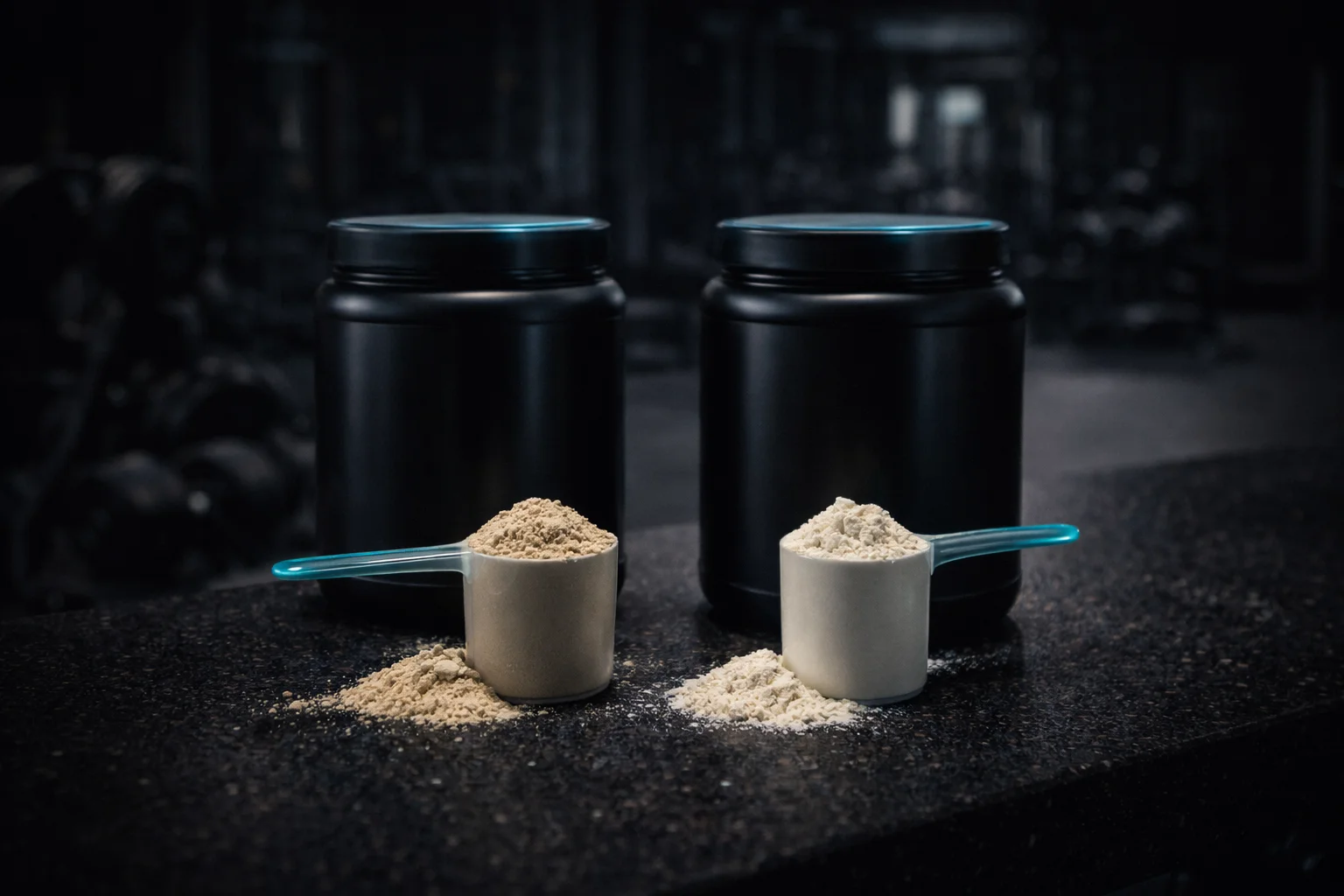
Whey protein dominates the supplement aisle. It's marketed as the gold standard, the serious lifter's choice, the scientifically superior option for muscle building. Walk into any nutrition store and the message is clear: whey for gains, soy for people who can't do dairy. The hierarchy seems established, backed by decades of research showing whey's superiority.
But here's what rarely gets mentioned in those comparisons: whey naturally contains more leucine per gram than soy. Leucine is the amino acid that acts as a molecular trigger for muscle protein synthesis, the process that builds new muscle tissue. When studies compare "equal protein amounts" of soy versus whey, they're not actually providing equal anabolic signals. Whey delivers more leucine, so of course it performs better.
It's like comparing two cars on a track but giving one premium fuel and the other regular. The premium-fueled car wins, and everyone concludes it's a superior vehicle. But was it the car itself or the fuel that made the difference? You can't know until you give both cars the same fuel.
A randomized controlled trial did exactly that for protein supplementation. Researchers formulated soy and whey supplements to match leucine content, then tracked muscle and strength gains over 12 weeks of supervised resistance training. By equalizing the primary anabolic trigger, they could test whether protein source itself makes a difference. The results challenge the protein hierarchy that dominates fitness culture.
The Research Question: Source or Signal?
The study's primary aim was both simple and important: determine whether soy protein and whey protein supplements matched for leucine content lead to different outcomes during resistance training.
Specifically, researchers examined whether leucine-matched soy and whey differed in their effects on:
- Lean body mass - the tissue that actually drives metabolism and strength
- Muscle strength - functional force production capacity
- Total body mass - overall changes in weight
The intervention took place over 12 weeks of supervised resistance training in untrained adults. By controlling leucine intake, the study aimed to isolate protein source as the variable of interest.
Why Leucine Matching Matters: Most soy versus whey studies compare equal protein weights (20g soy vs 20g whey). But whey contains roughly 10-12% leucine while soy contains 7-8%. This means 20g whey provides about 2.2g leucine while 20g soy provides about 1.5g. That 0.7g difference in leucine is substantial for triggering muscle protein synthesis.
Study Design: Leveling the Playing Field
Randomized, Double-Blind Trial
The researchers conducted a randomized, double-blind trial where participants were randomly assigned to receive either soy or whey protein supplementation. Neither the participants nor the researchers conducting assessments knew which supplement each person was consuming until data analysis was complete.
This design is the gold standard for minimizing bias and expectation effects. If participants knew they were taking "inferior" soy protein, their training effort or perceived results might be influenced by that belief.
Participants: Untrained Adults
The trial enrolled 61 untrained adults with the following characteristics:
| Demographic | Details |
|---|---|
| Age Range | 18-35 years |
| Sex Distribution | 19 men, 42 women |
| Training Status | Untrained (no structured resistance training background) |
| Completion Rate | 48 completed full study (typical for 12-week interventions) |
Using untrained participants is strategic for this research question. This population responds robustly to resistance training, creating a strong signal that makes it easier to detect nutritional differences if they exist. If soy and whey are truly different when leucine is matched, untrained individuals should show that difference clearly.
Standardized Resistance Training
All participants completed the same training protocol to ensure that supplementation, not training variation, drove any outcome differences:
- Frequency: Three sessions per week
- Duration: 12 weeks (36 total sessions)
- Supervision: All sessions supervised to ensure compliance and proper form
- Program structure: Whole-body resistance training targeting major muscle groups
Supervised training is crucial. It eliminates the possibility that one group trained harder, more consistently, or with better technique than the other. Any differences in outcomes must be due to the nutritional intervention.
The Critical Intervention: Leucine-Matched Protein
Here's where this study diverges from typical protein comparisons. Participants consumed one of two protein supplements daily, but the formulations were specifically designed to provide equal leucine:
| Supplement | Protein Source | Leucine Content |
|---|---|---|
| Whey Group | Whey protein isolate | ~2 grams leucine per dose |
| Soy Group | Soy protein (fortified/adjusted) | ~2 grams leucine per dose (matched to whey) |
Because soy naturally contains less leucine per gram than whey, achieving leucine matching required either:
- Providing a slightly larger amount of soy protein
- Fortifying the soy protein with free leucine
- Using a specific soy formulation with enhanced leucine content
The exact method isn't always specified in brief reports, but the outcome is what matters: both groups received approximately the same leucine stimulus per dose. This eliminates leucine as a confounding variable and isolates protein source as the factor being tested.
Outcome Assessment
Researchers measured multiple markers of training adaptation before and after the 12-week intervention:
- Lean body mass - assessed via DXA or similar body composition analysis
- Muscle strength - measured through standardized strength testing protocols
- Total body mass - simple weight tracking to capture overall changes
These outcomes capture both structural changes (muscle tissue gained) and functional changes (force production improved).
Results: Protein Source Doesn't Matter When Leucine Is Equal
The findings were remarkably consistent across all primary outcomes. When leucine was matched, soy and whey produced statistically equivalent results.
Lean Body Mass: Identical Gains
Lean body mass increased significantly over the 12-week training period in both groups, confirming that the training program and protein supplementation were effective. The magnitude of lean mass gained was statistically equivalent between groups:
- Whey group: Significant increase in lean mass from baseline
- Soy group: Significant increase in lean mass from baseline
- Between-group comparison: No meaningful difference in lean mass gains
This is the primary finding that challenges the conventional hierarchy. When leucine intake was matched, soy supported lean tissue gains just as effectively as whey during resistance training. The protein source itself didn't create an advantage for muscle building.
Key Implication: Previous studies showing whey's superiority likely reflect its higher leucine content rather than inherent superiority of dairy-derived protein. Equalize the anabolic trigger, and the difference disappears.
Muscle Strength: No Whey Advantage
Both groups demonstrated significant improvements in muscle strength over the training program:
- Measures such as peak torque and maximal force production increased from baseline to post-training in both conditions
- No significant advantage emerged for whey protein when leucine content was controlled
- Strength gains were statistically equivalent between soy and whey groups
This finding challenges the assumption that whey inherently produces superior strength adaptations. Strength improvements paralleled the lean mass gains - both groups improved similarly when the leucine signal was matched.
Total Body Mass: Similar Trajectories
Total body mass changes followed the same pattern:
- Both groups showed similar increases in overall body weight
- The lack of divergence in body mass further supports that the protein sources were functionally equivalent
- Combined with the lean mass data, this suggests both groups were building muscle without excessive fat gain
Statistical Pattern: Consistent Equivalence
Across all primary outcomes measured, the statistical pattern was identical: both groups improved significantly from baseline (training worked), but no significant differences existed between groups (protein source didn't matter when leucine was matched). This consistency across multiple outcomes strengthens confidence in the core finding.
What This Study Actually Proves
Within the carefully defined scope of this randomized controlled trial in untrained adults, the conclusion is clear and well-supported:
When leucine content is equalized, soy and whey protein supplementation produce comparable gains in lean body mass and muscle strength during 12 weeks of supervised resistance training.
This directly challenges the categorical assertion that whey protein is inherently superior for muscle development. The superiority observed in many previous studies appears to be driven by higher leucine delivery rather than protein source per se.
Mechanistic Interpretation: Leucine as the Primary Driver
The Leucine Threshold Hypothesis
Research consistently shows that muscle protein synthesis requires a leucine threshold to be crossed - typically around 2-3 grams per feeding depending on body size and training status. Below this threshold, the anabolic response is blunted. Above it (to a point), additional leucine provides diminishing returns.
Whey protein naturally delivers leucine in amounts that easily exceed this threshold. Soy protein, with lower natural leucine content, often falls short when equal protein weights are compared. By matching leucine content at approximately 2 grams per dose, this study ensured both protein sources crossed the anabolic threshold.
Once that threshold is met, additional differences in protein source appear to matter minimally for long-term training adaptations in untrained individuals.
Essential Amino Acid Completeness
Both soy and whey are complete proteins containing all essential amino acids. The primary difference is the relative proportions. Soy has less leucine but adequate amounts of other essential amino acids.
The findings suggest that when the rate-limiting factor (leucine) is equalized, the other amino acids present in both proteins sufficiently support muscle protein synthesis and training adaptations.
Reframing Plant vs Animal Protein Debates
The results imply that previously observed differences between plant and animal proteins may reflect amino acid composition and quantity rather than fundamental differences in protein quality or bioavailability. For muscle building purposes, what matters is delivering adequate essential amino acids with sufficient leucine to trigger anabolic signaling.
Protein source (plant vs animal) appears to be secondary to amino acid composition when evaluating capacity to support resistance training adaptations.
What This Study Does NOT Claim
To avoid overinterpretation, several important boundaries must be clearly defined:
Not All Plant Proteins Are Equal to Whey
The study tested only leucine-matched soy protein specifically. It does not establish that rice protein, pea protein, hemp protein, or other plant sources would perform equally when leucine-matched. Soy is unique among plant proteins in having a relatively complete amino acid profile.
Doesn't Measure Acute Protein Synthesis
The study measured long-term training adaptations (lean mass, strength) over 12 weeks, not acute muscle protein synthesis rates over hours. It's possible that whey still produces a faster or larger spike in protein synthesis acutely, but if so, that difference didn't translate to superior long-term outcomes when leucine was matched.
Population Limitations
Findings apply specifically to untrained adults aged 18-35. Trained athletes might have different protein requirements or sensitivities. Older adults might benefit differently from various protein sources due to anabolic resistance. The results cannot be automatically generalized beyond the tested population.
Supplement Context Only
The study tested protein supplements in isolation, not whole food protein sources within complete dietary contexts. Whole food proteins differ in digestion rate, satiety effects, micronutrient content, and meal matrix effects that supplements don't capture.
Practical Applications: Rethinking Protein Choices
Protein Source Flexibility for Muscle Building
For individuals focused on muscle growth and strength, this study provides evidence that soy protein can be a legitimate alternative to whey when leucine intake is comparable. This has practical implications for:
- Vegetarians and vegans - can build muscle as effectively as omnivores when protein is properly selected
- Lactose intolerant individuals - don't need to force dairy consumption or pay premium prices for lactose-free whey
- Those with dairy sensitivities - have an evidence-based plant alternative
- Environmental or ethical concerns - can choose plant protein without sacrificing results
- Budget-conscious trainees - soy protein is typically less expensive than whey
Focus on Amino Acid Profiles, Not Just Protein Source
Rather than rigidly categorizing proteins as "superior" or "inferior" based on origin, the evidence supports a more nuanced approach focused on:
- Total daily protein intake - still the primary determinant of muscle building
- Essential amino acid adequacy - ensure all nine essential amino acids are consumed regularly
- Leucine per serving - aim for roughly 2-3g leucine per post-workout feeding
- Protein distribution - spread intake across multiple meals
Protein source becomes a secondary consideration once these fundamentals are met.
Practical Implementation for Plant-Based Protein
For individuals using soy or other plant proteins, ensuring adequate leucine may require:
- Larger serving sizes - using 25-30g plant protein instead of 20g to match leucine content
- Leucine fortification - adding 1-2g free leucine to plant protein shakes
- Protein blends - combining complementary plant proteins (soy + pea, for example)
- Checking labels - selecting formulations explicitly designed for leucine content
When Protein Source Might Still Matter
Despite this study's findings, there may be contexts where protein source differences persist:
- Very low protein intakes - when total protein is insufficient, source quality might matter more
- Older adults - may have higher leucine requirements to overcome anabolic resistance
- Extreme training volumes - elite athletes with very high protein turnover might benefit from faster-digesting proteins at specific times
- Medical conditions - certain populations might absorb or utilize proteins differently
Study Limitations Worth Noting
Untrained Population Response
All participants were untrained at baseline. Untrained individuals respond robustly to resistance training with almost any reasonable nutritional support. This may reduce sensitivity to subtle protein source differences. Trained athletes closer to their genetic ceiling might show different responses.
Limited Detail on Formulation
Specific details about how leucine matching was achieved (larger soy doses vs free leucine addition vs specific soy cultivar) aren't always fully detailed in brief reports, making exact replication challenging.
Supplement Context, Not Whole Foods
The study tested protein supplements consumed in isolation, not whole food protein sources within complete meals. Digestion dynamics, satiety, micronutrient content, and food matrix effects of whole soy foods (tofu, tempeh, edamame) versus whole dairy foods (Greek yogurt, cottage cheese, milk) weren't addressed.
Single Comparison
Only soy versus whey was tested. Other plant proteins (pea, rice, hemp, blends) weren't included, so conclusions don't automatically extend to all plant protein sources.
The Bigger Picture: Challenging Protein Hierarchies
This research exemplifies how controlling for confounding variables can overturn widely accepted nutritional hierarchies. The fitness industry has long promoted whey as categorically superior to plant proteins, but that conclusion was built on studies that compared unequal leucine intakes.
Other examples of similar reassessments in nutrition research:
- Saturated fat and heart disease - relationships more complex when replacing nutrients are controlled
- Meal frequency and metabolism - total intake matters more than timing when calories are matched
- Fast vs slow carbs for performance - total carbohydrate matters more than glycemic index in many contexts
The common lesson: simple hierarchies often collapse when key variables are properly controlled. Protein source superiority may be more about amino acid composition than fundamental protein quality.
Summary: Level the Field, Erase the Difference
This randomized controlled trial provides important evidence that challenges conventional protein recommendations.
Primary finding: When leucine content was matched at approximately 2 grams per dose, soy and whey protein supplementation resulted in identical gains in lean body mass and muscle strength during 12 weeks of supervised resistance training in untrained adults.
Mechanism: The perceived superiority of whey protein appears to be driven primarily by its higher natural leucine content rather than inherent advantages of dairy-derived protein. Once the leucine signal is equalized, protein source ceases to be a determining factor for muscle and strength gains.
Practical implication: For resistance training adaptations, meeting essential amino acid requirements and crossing the leucine threshold appears more important than whether protein comes from plant or animal sources. Properly formulated plant proteins can support muscle building as effectively as whey.
Bottom line: The protein hierarchy promoted in supplement marketing - whey on top, plant proteins as inferior alternatives - is built on unequal comparisons. When you level the playing field by matching leucine, that hierarchy collapses. Soy protein isn't a compromise for people who can't do dairy. When properly formulated, it's a legitimate option that produces identical results to the supposed gold standard. The difference isn't the protein. It's the leucine. Fix that, and the source stops mattering.
References and Further Reading
- Volek JS, Volk BM, Gómez AL, et al. Whey protein supplementation during resistance training augments lean body mass. Journal of the American College of Nutrition. 2013;32(2):122-135. PMID: 24015719
- Tang JE, Moore DR, Kujbida GW, et al. Ingestion of whey hydrolysate, casein, or soy protein isolate: effects on mixed muscle protein synthesis at rest and following resistance exercise in young men. Journal of Applied Physiology. 2009;107(3):987-992. PMID: 19589961
- Lynch HM, Buman MP, Dickinson JM, et al. No significant differences in muscle growth and strength development when consuming soy and whey protein supplements matched for leucine following a 12 week resistance training program in men and women: a randomized trial. International Journal of Environmental Research and Public Health. 2020;17(11):3871. PMID: 32486114